

Sustainability · 2025
In this section53 topics
- Sustainability Policy & Goals — Overview1 item
- Sustainability Policy4 items
- Sustainability Goals & UN SDGs3 items
- Policy Review3 items
- Business Value Chain1 item
- Stakeholder Analysis1 item
- Environmental Policy & Guidelines5 items
- Environmental Policy Review2 items
- Energy — Plan & Guidelines2 items
- Energy — Electricity Consumption1 item
- Energy — Fuel Consumption1 item
- Energy — Targets2 items
- Energy — Performance & Outcomes2 items
- Water — Plan & Guidelines1 item
- Water — Withdrawal, Discharge & Consumption1 item
- Water — Targets1 item
- Water — Performance & Outcomes2 items
- Waste — Plan & Guidelines2 items
- Waste — Generation, Disposal & Recycling1 item
- Waste — Targets2 items
- Waste — Performance & Outcomes2 items
- GHG — Plan & Guidelines2 items
- GHG — Emissions1 item
- GHG — Emissions Verification1 item
- GHG — Principles & Standards1 item
- GHG — Targets1 item
- GHG Targets — Other Targets1 item
- GHG — Performance & Outcomes2 items
- Environmental Legal Incidents1 item
- Other Environmental Management1 item
- Social Sustainability — Overview1 item
- Social Policy & Guidelines4 items
- Social Policy Review3 items
- Social — Principles & Standards Practised1 item
- Human Rights Due Diligence4 items
- Employees — Plan & Guidelines3 items
- Employees — Workforce1 item
- Employees — Remuneration & Provident Fund2 items
- Employees — Training & Development1 item
- Employees — Occupational Health & Safety1 item
- Employees — Labour Relations1 item
- Employees — Employee Representation2 items
- Employees — Targets2 items
- Employees — Performance & Outcomes2 items
- Customers — Plan & Guidelines3 items
- Customers — Satisfaction Results1 item
- Customers — Targets2 items
- Customers — Performance & Outcomes2 items
- Community & Social — Plan & Guidelines3 items
- Community & Social — Targets2 items
- Community & Social — Performance & Outcomes2 items
- Other Social Management1 item
- Law Violation Incidents1 item
Sustainability Policy & Goals — Overview
Introduction
For over 32 years in the human resources service business, PRTR believes in the importance of "people" as a key driver for society, economy, and environment, as well as the continuous and rapid technological changes. "People" must constantly adapt and develop their skills to respond to all changes and keep pace with the evolving times. PRTR is committed to operating its business in accordance with its organizational mission: to develop people and improve employment, create a better quality of life, and contribute to a better society (Better Career, Better Life, Better Society). This is to achieve the organization's vision, strategies, and goals for sustainable business growth.
PRTR is committed to continuously developing its business and services to provide comprehensive, integrated services and elevate service standards to an international level. Furthermore, it leverages various technologies to support efficient business growth, achieve strong performance, and ensure financial stability. It is also committed to operating responsibly towards society and the environment under the principles of corporate governance and good corporate governance practices. This is to strengthen a stable business foundation for stakeholders and prepare for various potential changes in economic, social, and environmental aspects.
Sustainability Policy
Introduction
The Company believes that good corporate governance is a crucial foundation for efficient, transparent, and verifiable management, which significantly contributes to building confidence among shareholders, stakeholders, and all relevant parties. It also supports the Company in achieving its defined vision, strategies, objectives, and goals, while generating good performance, adaptability to change, and stable and sustainable long-term growth.
To ensure operations align with good corporate governance and meet stakeholder expectations, the Company has established a Sustainability Development Policy, which is consistent with the Corporate Governance Code (CG Code) of the Securities and Exchange Commission (SEC) and relevant international standards. Furthermore, the Company has integrated sustainable development issues into its vision, mission, and business strategies, and adheres to the United Nations' Sustainable Development Goals (SDGs) as a guideline for setting sustainability directions and targets, covering all dimensions: economic, social, and environmental. The Company mandates that this policy be reviewed at least once a year to ensure it remains consistent with the ever-changing business context.
Additionally, the Company is committed to transparently disclosing its performance in accordance with the SET Reporting Guide framework of the Stock Exchange of Thailand, through the preparation of a "Sustainability Report," which is part of the One Report. This report is prepared to summarize annual sustainability performance and serves as information for continuous review, improvement, and development of operational processes, in order to manage potential risks and support the Company's long-term sustainable growth.
Has a Sustainability Policy
Yes
Policy Description
In 2025, the Company remains committed to continuously pursuing sustainable development initiatives to drive the organization's growth in parallel with the rapidly changing and increasingly complex global context. Underpinning its sustainable development efforts, the Company prioritizes conducting business in accordance with good corporate governance principles, adherence to business ethics, and anti-corruption policies, as well as systematically integrating development principles and sustainability goals into its business strategies.
The Company has adopted the United Nations' Sustainable Development Goals (SDGs) as a reference framework for identifying material sustainability topics and operational targets. This is to drive concrete implementation throughout the value chain, taking into account impacts on stakeholders, society, and the environment. This continuous effort aims to elevate sustainability performance across all dimensions.
Furthermore, in 2025, the Company reviewed its sustainability policy at the Board of Directors Meeting No. 5/2025 on November 10, 2025. The review covered key issues, including risk management, management of conflicts of interest, complaint mechanisms, as well as the roles, duties, and responsibilities of the Board of Directors. This is to ensure that the Board can perform its duties efficiently, transparently, and in accordance with good corporate governance principles, while also supporting the Company's business operations to achieve long-term sustainable growth.
Policy Document Link
https://investor.prtr.com/storage/downloads/corporate-governance/corporate-policies/prtr-sustainability-development-policy-th.pdf
Sustainability Goals & UN SDGs
Has Sustainability Goals
Yes
Goals Description
The company has set short-term and long-term corporate sustainability management goals, specifying sustainability management goals across economic, social, and environmental dimensions, and integrating them with the United Nations' Sustainable Development Goals (SDGs). Details are as follows:
Environmental Dimension (Environment)
The company conducts its business in conjunction with environmental conservation, a globally important issue, to drive efforts in reducing global warming and preventing climate change, such as
Energy and Resource Management
Factors affecting the company: Rising energy costs due to fluctuating electricity and fuel prices
Goal: Reduce electricity and water consumption, promote recycling
Response Plan: Promote policies to reduce electricity and water consumption, encourage recycling by establishing waste separation points in the office
Integrated with Sustainable Development Goal (SDG) 12
Climate Change Management
Factors affecting the company: Stricter environmental regulations
Goal: Expand the use of electric vehicles (EVs) and reduce the use of fossil fuel vehicles
Response Plan: Gradually convert the company's vehicles to EVs
Integrated with Sustainable Development Goals (SDGs) 7 and 13
Social Dimension (Social)
The company conducts its business based on the principle of respecting human rights, treating employees fairly, and ensuring their health and safety. It focuses on operating in conjunction with caring for and developing the broader community, fostering mutual growth with the company, meeting the true needs of customers, and adapting to changing social and economic contexts. It also aims to create equal access to opportunities for underprivileged individuals in society, alongside providing excellent service quality through convenience, speed, and safety for users, and emphasizes occupational health and safety for all personnel, such as
Workplace Safety and Environment
Factors affecting the company: Accident risks, employee health impacting work efficiency
Goal: Zero work-related accidents, 100% access for all employees to mental and physical health programs
Response Plan: Install first aid equipment and emergency assistance points in the workplace, provide occupational safety training, and promote health activities
Integrated with Sustainable Development Goals (SDGs) 3 and 8
Creating Opportunities and Increasing Employment Rates
Factors affecting the company: Underprivileged labor, societal expectations for equality
Goal: Promote employment for vulnerable groups such as persons with disabilities, organize CSR projects/activities to foster professional work annually
Response Plan: Collaborate with public and private organizations to create equal employment opportunities
Integrated with Sustainable Development Goals (SDGs) 1 and 4
Equality and Diversity in the Organization
Factors affecting the company: Acceptance of diversity in the workplace and expectations regarding human rights and non-discrimination
Goal: Increase the proportion of diverse employees, 0 complaints regarding discrimination or human rights violations
Response Plan: Develop a comprehensive Human Rights Policy covering all employee groups, promote fair compensation and benefits (Equal Pay & Benefits) appropriately regardless of gender, age, or social status
Integrated with Sustainable Development Goals (SDGs) 5 and 8
Governance and Economic Dimensions
The company prioritizes sustainable business operations, aiming to achieve stable returns, transparency, robust oversight and balance mechanisms, risk management, and supply chain management. It strictly adheres to various rules and regulations under the principles of good corporate governance (CG) and comprehensive stakeholder care to achieve its business objectives and sustainable development goals, such as
Corporate Governance and Anti-Corruption
Factors affecting the company: Governance and regulatory standards
Goal: Maintain an "Excellent" CGR corporate governance evaluation score, 0 incidents or complaints arising from business ethics violations
Response Plan: Continuously review and update policies, conduct regular employee training, and consistently perform risk assessments
Integrated with Sustainable Development Goals (SDGs) 16 and 17
Data Security, Personal Data Protection, and Cybersecurity
Factors affecting the company: Increasing cyber threats and data security expectations
Goal: 0 incidents of internal data leakage, 0 complaints of personal data breaches, and 0 cyber threats affecting operations
Response Plan: Regularly review and improve the Backup & Disaster Recovery Plan, conduct PDPA Awareness Training and Cybersecurity Penetration Tests annually, and continuously install and update firewalls and cybersecurity systems
Integrated with Sustainable Development Goal (SDG) 16
Creating Innovation to Enhance Service Efficiency
Factors affecting the company: Technological changes
Goal: Create 1 innovation to improve work processes
Response Plan: Support all departments in developing and improving work processes to enhance efficiency and elevate operational quality
Integrated with Sustainable Development Goal (SDG) 9
Maintaining Service Quality and Standards
Factors affecting the company: Competition in service quality
Goal: Increase the average customer satisfaction evaluation score
Response Plan: Continuously develop and improve service processes to enhance efficiency and reduce errors
Integrated with Sustainable Development Goal (SDG) 8
UN Sustainable Development Goals
| SDG Goal |
|---|
| Goal 1 No Poverty |
| Goal 1 No Poverty |
| Goal 3 Good Health and Well-being |
| Goal 3 Good Health and Well-being |
| Goal 4 Quality Education |
| Goal 4 Quality Education |
| Goal 5 Gender Equality |
| Goal 5 Gender Equality |
| Goal 7 Affordable and Clean Energy |
| Goal 7 Affordable and Clean Energy |
| Goal 8 Decent Work and Economic Growth |
| Goal 8 Decent Work and Economic Growth |
| Goal 9 Industry, Innovation and Infrastructure |
| Goal 9 Industry, Innovation and Infrastructure |
| Goal 12 Responsible Consumption and Production |
| Goal 12 Responsible Consumption and Production |
| Goal 13 Climate Action |
| Goal 13 Climate Action |
| Goal 16 Peace, Justice and Strong Institutions |
| Goal 16 Peace, Justice and Strong Institutions |
| Goal 17 Partnerships for the Goals |
| Goal 17 Partnerships for the Goals |
Policy Review
Policy Reviewed This Year
Yes
Policy Changed This Year
No
Review Details
In 2025, the Company conducted a review of its sustainability policy at the Board of Directors Meeting No. 5/2025 on November 10, 2025. The review covered key issues, including risk management, conflict of interest management, complaint handling mechanisms, as well as a review of the roles, duties, and responsibilities of the Board of Directors to ensure that the Board can perform its duties effectively, transparently, and in accordance with good corporate governance principles, and to support the Company in conducting its business sustainably in the long term.
Business Value Chain
Value Chain Description
The company prioritizes the management of its business value chain, which is a tool to enhance competitiveness and reduce operational risks related to sustainability issues. This involves analyzing core activities from upstream to downstream in the organization's business operations, coupled with identifying key stakeholders or those with business relationships. Subsequently, the relationships of stakeholders are reviewed for both positive and negative impacts from the organization's activities. The company's value chain comprises the following primary and support activities:
Primary Activities
Sales and Customer Coordination
Contact customers to offer services that meet their specific needs.
Manage customer requests or requirements and build good relationships with both new and existing customers to provide continuous and efficient service.
Stakeholders: Customers, job applicants, business competitors, and society/community.
Marketing
Develop marketing strategies focusing on creating and disseminating service content through social media platforms such as Facebook and LinkedIn, as well as the company's website, to increase brand awareness, attract job applicants, and entice customers to choose our services, emphasizing content that aligns with target audiences and clearly communicates service strengths.
Stakeholders: Job applicants, employees, customers, and government agencies / regulatory bodies.
Service Preparation
Screen, recruit, and hire qualified applicants according to customer numbers and requirements, while providing professional human resource consulting.
Develop online training courses with appropriate content designed by experts in each field.
Develop and improve human resource management software systems to be modern and responsive to current needs.
Stakeholders: Job applicants, employees, and partners.
Service Delivery
Source job applicants matching customer requirements, manage the hiring of outsourced employees according to customer needs, including payroll administration and employee training management, and other related services to meet customer demands.
Deliver training plans and conduct training for employees.
Deliver software and provide user training.
Stakeholders: Job applicants, customers, and employees.
Customer Support
Monitor results and receive feedback from both customers and job applicants.
Provide after-sales services, such as evaluating outsourced employees and improving personnel development processes according to customer needs or requests.
Monitor training effectiveness and adjust curricula accordingly.
Support customer software usage in case of issues.
Stakeholders: Job applicants and employees.
Support Activities
Internal Human Resource Management
Develop internal personnel through training and retention of talented employees, manage compensation, welfare, and provide adequate and appropriate equipment or tools to support employees in delivering quality service to customers.
Stakeholders: Employees and partners.
Information Technology and Infrastructure
Maintain, develop, and improve critical systems with up-to-date technology to support the work of employees within the organization.
Maintain, develop, and improve information technology infrastructure and systems to enhance data security and ensure continuous, uninterrupted operations.
Manage applicant and employee databases to meet customer needs.
Stakeholders: Employees, customers, and job applicants.
Corporate Governance
Develop, review, and update corporate governance policies, manuals, and practices to comply with relevant laws, good governance principles, and standards.
Oversee risk, legal compliance, and organizational strategic planning to ensure clear and transparent operational direction.
Manage financial and accounting aspects to ensure stability and efficiency in business operations, and establish systems to support operations in line with ethical principles and governance standards.
Stakeholders: Government agencies / regulatory bodies, shareholders / investors / analysts, society and community, and employees.
Procurement
Provide work-related resources efficiently. of the highest quality and efficiency.
Recruit and evaluate partners to meet company standards and policies.
Manage partner relationships.
Stakeholders: Partners and employees
Identification and Assessment of Material Issues
The company has assessed risks and opportunities from stakeholders in each activity within the value chain, adhering to the principles of Global Reporting Initiative Standards (GRI Standards) and Sustainable Development Goals (SDGs). The process and steps for assessing material sustainability issues are as follows:
Identification of Relevant Sustainability Issues: The company considers various factors affecting the business, including both risks and opportunities, from internal and external perspectives. The focus is on evaluating factors that may impact operations and long-term value creation, as well as considering all stakeholder groups, to ensure the company can operate sustainably and effectively respond to challenges in all aspects. The key issues are as follows:
Environmental Aspects
Energy and Resource Management
Climate Change Management
Social Aspects
Workplace Safety and Environment
Promotion and development of personnel, including Create opportunities and increase employment rates.
Equality and Diversity in the Organization
Corporate Governance and Economic Aspects
Corporate Governance and Anti-Corruption
Data Security, Personal Data Protection, and Cybersecurity
Create innovations to enhance service efficiency.
Maintain service quality and standards.
Assessment and Prioritization: The company assesses the significant impacts of its business operations on all stakeholder groups through a Materiality Prioritization process, considering two levels of importance:
Importance/Impact on Business: Considered from various aspects such as finance, operations, strategy, organizational image/reputation, and laws/regulations.
Importance/Impact on Stakeholders: Considered based on the number of stakeholder groups affected, or the level of interest stakeholder groups have in the issue, as well as how the issue influences stakeholder decisions.
Scoring in each aspect is divided into 4 levels: Low, Medium, High, and Very High. The company has prioritized sustainability issues and mapped them into a Materiality Matrix.
The company has established management guidelines for improving and developing business processes in line with the identified key issues, with the goal of reducing negative impacts and potential risks to business operations, as well as building sustainable competitiveness. These guidelines are described in the section on sustainability goals and key issues.
Review and approve key issues.
The Sustainability Working Group will jointly consider and propose sustainability operational plans to the Corporate Governance, Sustainable Development, and Remuneration Committee. These plans will then be presented to the Board of Directors for approval and further implementation.
Develop, improve, and monitor results.
The company manages material sustainability issues by setting goals and continuously operating, while regularly monitoring results to achieve sustainability strategies, and appropriately disclosing operational information to stakeholders on each issue.
Stakeholder Analysis
Stakeholder Analysis
| Stakeholder Type | Stakeholders | Stakeholder Expectations | Response to Expectations | Communication Activities |
|---|---|---|---|---|
| Internal stakeholders | 2921 · Description: Employees | - Appropriate compensation and benefits
- Career growth opportunities
- Company stability
- Suitable working environment and space
- Availability and sufficiency of operational equipment
- Professional development and career advancement
- Care, support, and creation of equal opportunities | - Establish policies and plans for personnel development.
- Develop a Succession Plan to outline career growth for various key positions.
- Survey and review compensation to ensure it is appropriate and competitive with the labor market.
- Ensure a safe and suitable working environment.
- Promote and support both online and offline training for employees within the organization to enhance work potential and create opportunities for growth.
| 2941 · Description: Online Communication · 2942 · Description: Internal Meeting · 2946 · Description: Employee Engagement Survey · 2949 · Other name: Welfare Committee Meeting · Description: Others |
| External stakeholders | 2923 · Description: Customers | - Deliver services according to agreements
- Develop service quality to meet customer needs
- Service fees are appropriate
- Provide advice and professionally resolve issues
- Maintain service standards and ensure customer data security
- Disclose service information completely, accurately, and without distorting facts | - Develop service systems to international standards, such as ISO 27001 Information Security Management System
- Communicate comprehensive information about services
- Customer satisfaction surveys
- Implement internal audit and risk management systems
- Develop employees' capabilities to provide professional customer service
- Improve internal operational systems to enhance service efficiency
- Develop comprehensive services to meet customer needs, such as training services, payroll data preparation services, and Human Resources Information Systems (HRIS)
| 2941 · Description: Online Communication · 2947 · Description: Satisfaction Survey · 2949 · Other name: Meeting with clients · Description: Others |
| External stakeholders | 2928 · Description: Society · 2936 · Other name: Community · Description: Others | - Collaborate in developing, promoting skills, and providing knowledge to students, youth, and the general public to offer opportunities for accessing desired careers.
- Promote employment for underprivileged individuals.
- Conduct business operations with consideration for the environment.
- Promote and support public benefit activities. | - Collaborate with various universities to organize activities promoting knowledge and readiness for the professional world.
- Cooperate with foundations, associations, and government agencies to develop and promote knowledge, as well as employment opportunities for students, the general public, and underprivileged individuals.
- Share human resource management knowledge through the company's social media and website.
- Develop technology to support operations and reduce the consumption of natural resources.
| 2940 · Description: Social Event · 2941 · Description: Online Communication · 2949 · Other name: Receiving ideas and suggestions through the company's various channels · Description: Others |
| External stakeholders | 2904 · Description: Investors or investment institutions · 2905 · Description: Analysts · 2913 · Description: Shareholders | - Valuable return on investment and sustainable organizational growth
- Good corporate governance
- Accurate, complete, timely, transparent, and equitable information, including both financial and non-financial data
- Risk management system in place
- Effective internal audit and control system | - Operate the business efficiently to meet shareholder expectations and provide appropriate dividends.
- Disclose information transparently and consistently, such as meeting with investors every quarter.
- Maintain an investor relations department to communicate information, answer inquiries, and coordinate with investors.
- Develop business plans and operational strategies, including participation in projects to enhance the value of listed companies (JUMP+).
- Prudently manage risks.
| 2938 · Description: Visit · 2943 · Description: External Meeting · 2944 · Description: Annual General Meeting (AGM) · 2949 · Other name: Quarterly Performance Presentation · Description: Others · 2949 · Other name: Analysts' Meeting · Description: Others · 2949 · Other name: Listed Company Meeting with Investors · Description: Others · 2949 · Other name: Receiving feedback or answering inquiries from shareholders through investor relations channels · Description: Others |
| External stakeholders | 2899 · Description: Suppliers | - Transparent procurement, treating all business partners with fairness and equality, as stipulated in the business code of conduct. | - Comply with the procurement code of ethics to ensure fairness.
| 2941 · Description: Online Communication · 2949 · Other name: Prepare annual partner assessment report · Description: Others |
| External stakeholders | 2931 · Description: Government agencies and Regulators | - Comply with laws, regulations, and rules.
- Cooperate with and support various government policies. | - Strictly and correctly comply with laws, regulations, and various rules.
- Monitor newly enforced laws to ensure consistent and correct compliance.
- Have an anti-corruption policy, communicate it, and supervise it appropriately.
- Provide training and knowledge to employees as required by law. | 2941 · Description: Online Communication |
| External stakeholders | 2936 · Other name: Job applicant · Description: Others | - Protect personal data
- Suitable job opportunities aligned with skills, experience, and expected salary
- Provide support and assistance, and coordinate to furnish comprehensive information regarding job positions | - Provide complete and accurate job position details.
- Offer guidance on job interview preparation to enhance applicants' chances.
- Inform applicants about the company's Privacy Policy. | 2949 · Other name: Job board website · Description: Others · 2949 · Other name: Social Media (LinkedIn, Facebook) · Description: Others · 2949 · Other name: Recruitment Officer · Description: Others |
| External stakeholders | 2898 · Description: Competitors | - Fair competition
- Respect for each party's data and innovation | - Comply with competition law
- Protection of business information and intellectual property.
| 2941 · Description: Online Communication · 2949 · Other name: Annual Report · Description: Others · 2949 · Other name: Job Bidding · Description: Others · 2949 · Other name: Seminar · Description: Others |
Environmental Policy & Guidelines
Introduction
The Company prioritizes the development of environmental operations to comply with relevant laws, regulations, and international standards. It is committed to managing processes throughout the business value chain to ensure efficient resource utilization, coupled with reducing environmental impacts and supporting sustainable business operations. The Company has established the following guidelines for environmental care:
Establish environmental policies and practices to comply with relevant laws and regulations, as well as international standards, focusing on efficient service provision, coupled with reducing environmental impacts and valuable resource utilization through the concept of circular resource use for maximum benefit.
Instill awareness and promote environmentally friendly behavior to employees at all levels, by promoting economical and appropriate energy consumption, such as efficient use of electricity and water, waste and refuse segregation, as well as promoting guidelines for reducing and managing greenhouse gas emissions, to support long-term environmental impact reduction.
Systematic environmental management through continuous monitoring, evaluation, and reporting processes for consistent improvement and development, including collaboration with trade partners and business allies to elevate environmental standards throughout the value chain.
Communicate environmental policies and practices to ensure employees and stakeholders throughout the value chain are fully informed. The Board of Directors and management are committed to continuously overseeing and supporting the implementation of these policies to achieve the established environmental goals.
Additionally, the Company also prioritizes Safety, occupational health, and hygiene at work of personnel, by establishing policies on safety, occupational health, and environmental workplace to create a safe, hygienic, and efficient working environment, while continuously promoting and instilling safety awareness among employees at all levels.
Has an Environmental Policy
Yes
Policy Description
The Company is committed to conducting business in conjunction with environmental conservation, by prioritizing efficient resource utilization, enhancing energy efficiency, and reducing environmental impacts across all operational dimensions. Concurrently, it fosters an organizational culture that recognizes responsibility towards society, communities, and all stakeholders to support long-term growth. Furthermore, it supports and participates in activities that benefit the conservation and restoration of natural resources, as well as balanced environmental management, to create value and sustainability for society as a whole.
In 2025, the Company has driven environmental operations through key projects aimed at enhancing operational efficiency and reducing greenhouse gas emissions. These include the gradual transition of the organization's vehicle fleet to electric vehicles (EVs), improving waste management systems through source separation and promoting resource recovery, as well as developing a digital contract process. This process covers creation, approval, signing, and electronic storage of documents, which helps reduce paper consumption, enhance operational efficiency, and foster transparency. It also aligns with the Company's Digital Transformation direction and sustainability goals.
In addition, the Company continues to strengthen cooperation with government agencies, private sector entities, and civil society organizations in conducting activities related to the conservation and restoration of natural resources, as well as environmental quality development, to create shared value and sustainable positive impacts on society and communities.
Policy Document Link
https://investor.prtr.com/storage/downloads/corporate-governance/corporate-policies/prtr-social-environmental-responsibility-policy-th.pdf
Environmental Guidelines
| Guideline |
|---|
| Electricity Management |
| Fuel Management |
| Renewable/Clean Energy Management |
| Water Management |
| Waste Management |
| Greenhouse Gas and Climate Change Management |
Environmental Policy Review
Policy Reviewed This Year
Yes
Review Details
The Company regularly reviews its sustainable development policy at least once a year. The said policy was approved by the Board of Directors' Meeting No. 5/2568 on November 10, 2568, with the establishment of sustainable development policies encompassing good corporate governance, social value creation, and sustainable environmental management plans.
Energy — Plan & Guidelines
Has an Energy Management Plan
Yes
Plan Description
Efficient Electricity Consumption Plan
The Company recognizes the importance of efficient electricity consumption to support reduced operating costs, mitigate environmental impact, and promote sustainable business operations. Therefore, a systematic electricity management plan has been established with the following details:
Objectives:
To reduce unnecessary electricity consumption
To enhance energy efficiency within the organization
To instill energy-saving awareness among employees at all levels
Goals:
Reduce overall electricity costs by at least 5 percent in 2025 compared to 2024
Key Measures and Activities
Control and reduce daily electricity consumption By campaigning for employees to switch off electrical appliances when not in use, such as turning off lights and electrical devices after work or after using meeting rooms
Promote a culture of energy conservation within the organization Through continuous communication and campaigns, such as creating public relations materials, posters, emails, and awareness-building activities, to ensure all employees participate in energy reduction
Improve and develop equipment for higher efficiency Such as replacing light bulbs with LED bulbs, and regularly inspecting and maintaining electrical appliances to ensure efficient operation and greater energy savings
Fuel and Oil Reduction Plan
The Company prioritizes reducing oil and fuel consumption to enhance resource efficiency, lower operating costs, and mitigate environmental impact. A systematic operational plan has been established as follows:
Objectives:
To reduce oil and fuel consumption in various organizational activities
To promote efficient and environmentally friendly resource utilization
Goals :
Reduce oil and fuel consumption by no less than 5 percent in 2025 compared to 2024
Implementation Measures
Promote efficient travel planning By integrating travel routes for employees who need to deliver documents or perform external tasks, to reduce the number of trips, decrease fuel consumption, and lower greenhouse gas emissions
Promote the use of alternative energy and environmentally friendly vehicles Such as gradually transitioning the organization's vehicles to electric vehicles (and hybrid vehicles), while also supporting the use of clean energy to reduce reliance on fossil fuels, enhance energy efficiency, and support the transition to a low-carbon society
Regularly inspect and maintain vehicles Such as checking tire pressure, changing engine oil, and performing periodic vehicle inspections to improve fuel efficiency, reduce fuel waste, and extend vehicle lifespan
Energy — Electricity Consumption
Electricity Consumption
| Metric | Current Year | Previous Year | Two Years Ago |
|---|---|---|---|
| Total electricity consumption within the organization (Kilowatt-Hours) | 172,676 | 168,693 | 126,258.38 |
| Electricity purchased for consumption from non-renewable energy sources (Kilowatt-Hours) | 172,676 | 168,693 | 126,258.38 |
| Electricity purchased or generated for consumption from renewable energy sources (Kilowatt-Hours) |
Energy — Fuel Consumption
Fuel Consumption
| Metric | Current Year | Previous Year | Two Years Ago |
|---|---|---|---|
| Jet fuel (Litres) | |||
| Diesel (Litres) | |||
| Gasoline (Litres) | 10,691.09 | 14,505.68 | 18,024.72 |
| Fuel oil (Litres) | |||
| Crude oil (Barrels) | |||
| Natural gas (Standard cubic feet) | |||
| LPG (Kilograms) | |||
| Steam (Metric tonnes) | |||
| Coal (Metric tonnes) |
Energy — Targets
Has Set Targets
Yes
Targets
| Target | Base Year | Base Year Value | Target Year | Target Change (%) | Unit |
|---|---|---|---|---|---|
| Reduction of electricity purchased for consumption | 2,024 | 168,693 | 2,025 | 5 | Kilowatt-hour |
| Reduction of fuel consumption | 2,024 | 14,505.68 | 2,025 | 5 | Litres |
Energy — Performance & Outcomes
Has Performance Results
Yes
Performance Description
Electricity Consumption
The company prioritizes electricity conservation and promotes efficient energy use to mitigate environmental impact and support sustainable business operations. It has continuously implemented energy-saving campaigns in the workplace, such as measures requiring employees to turn off lights during lunch breaks and after work hours to reduce unnecessary energy consumption, as well as fostering an organizational culture of valuable energy use.
The company has continuously monitored and evaluated electricity consumption over the past three years to analyze resource usage trends and adapt energy conservation measures to suit the organization's growth. The operational results can be summarized as follows:
Year 2023
Total electricity energy expenses: 820,679.46 Baht
Electricity procurement volume: 126,258.38 kilowatt-hours (kWh)
Year 2024
Total electricity energy expenses: 1,096,504.50 Baht
Electricity procurement volume: 168,693.00 kilowatt-hours (kWh)
Year 2025
Total electricity expenses: 1,122,393.50 Baht
Electricity consumption volume: 172,676.00 kilowatt-hours (kWh)
Summary of Operational Results
From monitoring electricity consumption over the past three years, it was found that in 2025, both the volume of electricity consumption and energy expenses showed a slight upward trend compared to the previous year. This increase is primarily due to the adjustment of the air conditioning system to suit the office space and the number of employees, which led to a slight increase in electricity costs. Consequently, there has been increased utilization of office space and electrical equipment in line with the organization's growth.
Nevertheless, the company continues to implement energy management measures, focusing on efficient energy use, promoting employee awareness of energy saving, and upgrading equipment for higher efficiency. This aims to control costs and reduce environmental impact, while simultaneously supporting balanced and sustainable business growth.

Oil and Fuel Consumption
The company continuously monitors and manages oil and fuel consumption to control operating costs and reduce environmental impact. Data on both usage volume and expenses are collected, and measures are implemented to systematically enhance the efficiency of resource utilization within the organization. The operational results over the past three years can be summarized as follows:
Year 2023
Total expenses: 755,832.60 Baht
Oil consumption volume: 18,024.72 liters
Year 2024
Total expenses: 608,268.30 Baht
Oil consumption volume: 14,505.68 liters
Year 2025
Total expenses: 423,323.50 Baht
Oil consumption volume: 10,691.09 liters
Summary of Operational Results
Based on data from the past three years, the company has continuously reduced both expenses and the volume of oil and fuel consumption. This reflects the effectiveness of energy management measures, such as appropriate travel route planning, regular vehicle maintenance, and the promotion of alternative energy sources, including the gradual transition to electric vehicles (EVs) in some areas. This downward trend supports the reduction of operating costs, alongside the reduction of greenhouse gas emissions, and aligns with the company's long-term goals for energy conservation and sustainable business operations.
Water — Plan & Guidelines
Has a Water Management Plan
No
Water — Withdrawal, Discharge & Consumption
Water Withdrawal, Discharge & Consumption
| Metric |
|---|
| Total water withdrawal (Cubic meters) |
| Total water withdrawal by third-party water (Cubic meters) |
| Total water withdrawal by surface water (Cubic meters) |
| Total water withdrawal by groundwater (Cubic meters) |
| Total water withdrawal by seawater (Cubic meters) |
| Total water withdrawal by produced water (Cubic meters) |
| Percentage of wastewater treated before discharge (%) |
| Total water discharge (Cubic meters) |
| Total water discharge to third-party water (Cubic meters) |
| Total water discharge to surface water (Cubic meters) |
| Total water discharge to groundwater (Cubic meters) |
| Total water discharge to seawater (Cubic meters) |
| Total water consumption (Cubic meters) |
| Recycled water (Cubic meters) |
Water — Targets
Has Set Targets
No
Water — Performance & Outcomes
Has Performance Results
Yes
Performance Description
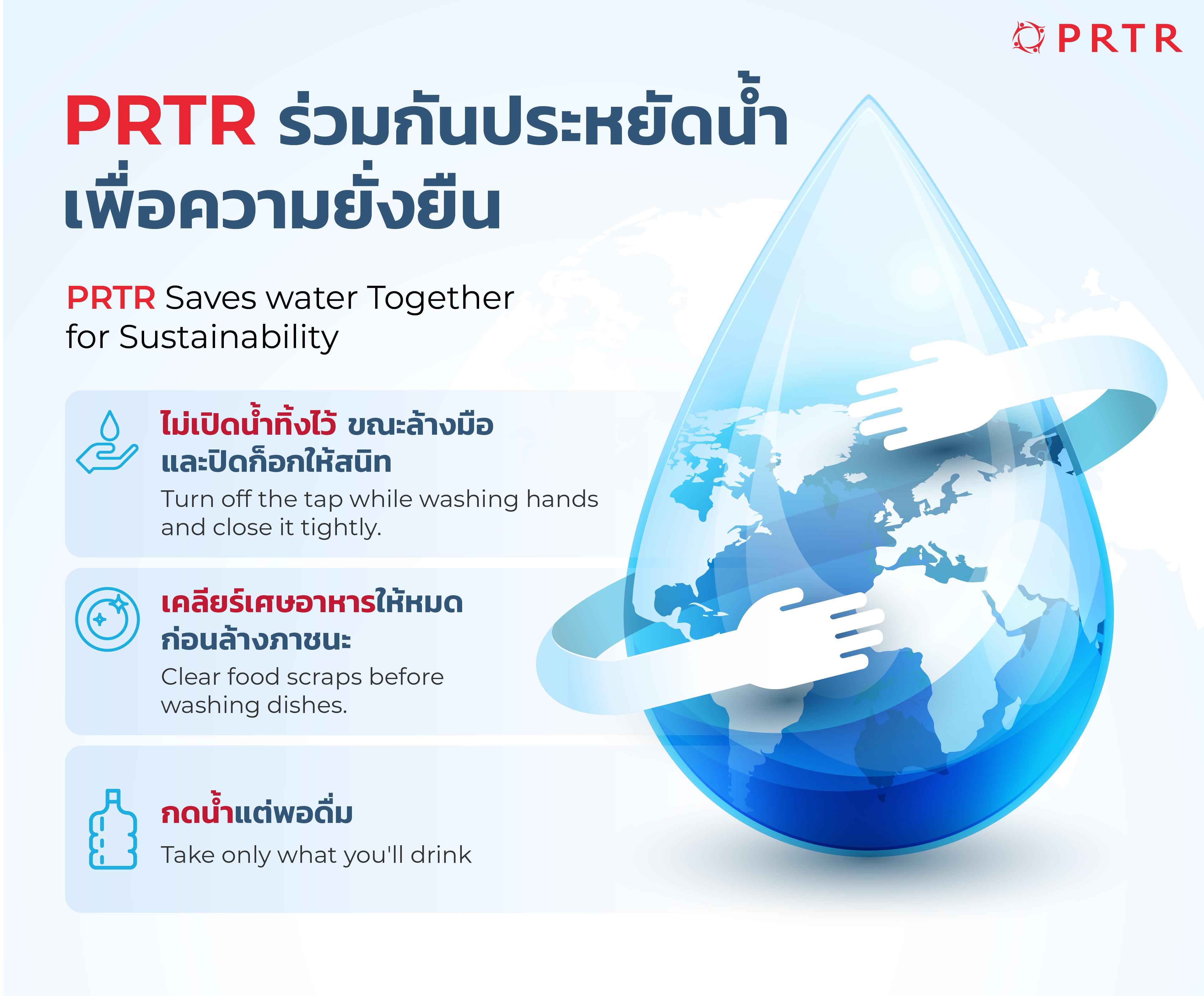
The company prioritizes efficient water resource management by continuously promoting awareness among employees regarding the value of water usage through ongoing internal campaigns and communications. Examples include publicizing water conservation practices, ensuring faucets are tightly closed after use, and avoiding unnecessary water consumption, all aimed at reducing resource loss and supporting long-term environmental conservation.
In this regard, Water utility costs are part of the expenses included in the premises lease agreement between the company and the building lessor. Consequently, the company is unable to separate water consumption data to compare annual changes. Nevertheless, the company remains committed to continuously implementing measures that promote efficient water usage, alongside fostering an organizational culture that emphasizes responsible natural resource consumption, in order to mitigate environmental impacts and support business operations in line with ESG principles.
Furthermore, the company collaborates with building lessors and partners in appropriate water resource management by supporting utility system maintenance guidelines, regular inspection and upkeep of equipment, and preventing leaks and water loss, all to enhance shared resource efficiency and create sustainable environmental outcomes.
Waste — Plan & Guidelines
Has a Waste Management Plan
Yes
Plan Description
Waste, Refuse, and Pollution Management Plan
The Company prioritizes reducing waste, refuse, and pollution by implementing measures to ensure resources are utilized with maximum efficiency and in an environmentally friendly manner.
Objectives
- Reduce the amount of waste and refuse generated from internal organizational activities.
- Increase the proportion of waste reuse and recycling - Promote an organizational culture that considers environmental and sustainability aspects.
Goals
- Reduce total waste by at least 5% by 2025 (compared to 2024).
- Increase the rate of waste reuse/recycling to 5% of total waste by 2025.
Key Measures and Activities
1. Source separation of waste, such as establishing waste separation points within the office (e.g., general waste, recyclable waste, hazardous waste) along with informational signs.
2. Promote Reuse and Recycle, such as utilizing office documents/materials efficiently and reducing plastic usage.
Waste — Generation, Disposal & Recycling
Waste Generation, Disposal & Recycling
| Metric | Current Year | Previous Year |
|---|---|---|
| Total waste generated (Kilograms) | 15,511 | 4,993 |
| Non-hazardous waste (Kilograms) | 15,511 | 4,993 |
| Non-hazardous waste - Landfilling (Kilograms) | ||
| Non-hazardous waste - Incineration (with energy recovery) (Kilograms) | ||
| Non-hazardous waste - Incineration (without energy recovery) (Kilograms) | ||
| Non-hazardous waste - Other disposal operations (Kilograms) | ||
| Hazardous waste (Kilograms) | ||
| Hazardous waste - Landfilling (Kilograms) | ||
| Hazardous waste - Incineration (with energy recovery) (Kilograms) | ||
| Hazardous waste - Incineration (without energy recovery) (Kilograms) | ||
| Hazardous waste - Other disposal operations (Kilograms) | ||
| Total reused/recycled waste (Kilograms) | 1,079 | 252 |
| Reused/Recycled non-hazardous waste (Kilograms) | 1,079 | 252 |
| Reused non-hazardous waste (Kilograms) | ||
| Recycled non-hazardous waste (Kilograms) | ||
| Reused/Recycled hazardous waste (Kilograms) | ||
| Reused hazardous waste (Kilograms) | ||
| Recycled hazardous waste (Kilograms) |
Waste — Targets
Has Set Targets
Yes
Targets
| Waste Type | Disposal Approach | Target | Base Year | Base Year Value | Target Year | Target Change (%) | Unit |
|---|---|---|---|---|---|---|---|
| Non-hazardous waste | 2758 · Description: Reuse · 2759 · Description: Recycle | Reduce waste volume | 2,024 | 4,993 | 2,025 | 5 | Kilograms |
| Non-hazardous waste | 2758 · Description: Reuse · 2759 · Description: Recycle | Increase waste utilization | 2,024 | 252 | 2,025 | 5 | Kilograms |
Waste — Performance & Outcomes
Has Performance Results
Yes
Performance Description
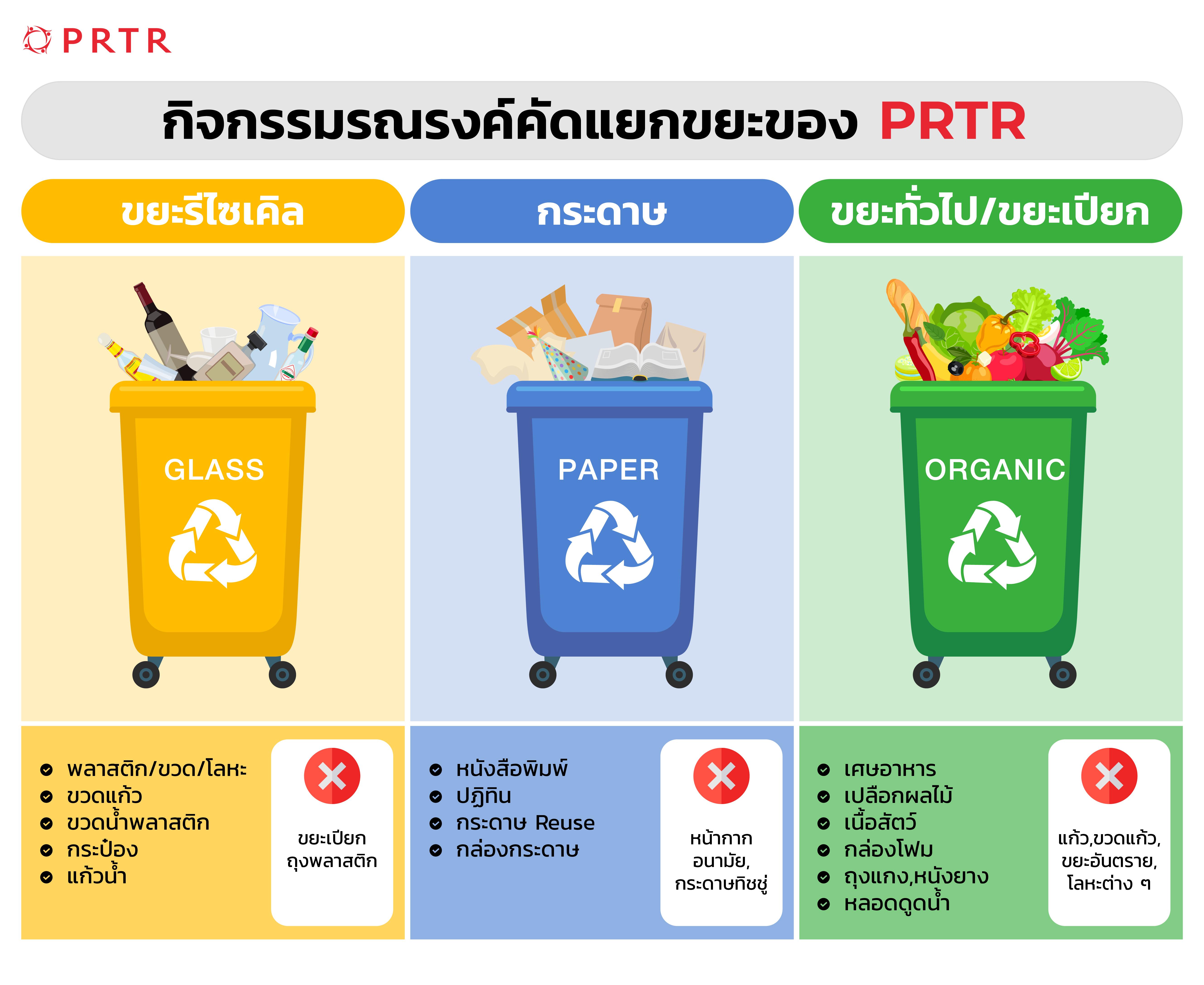
The Company prioritizes reducing waste, refuse, and pollution from its operations by focusing on efficient resource utilization, while promoting waste segregation, reuse, and recycling to minimize environmental impact and support sustainable business practices. The Company has established waste segregation points in various areas within the office, coupled with awareness campaigns to educate employees on reducing the use of non-recyclable materials and encouraging the selection of environmentally friendly materials, thereby fostering an organizational culture that values responsible resource consumption.
In 2025, the Company can summarize the data on waste and refuse generated from internal activities as follows:
Total waste and refuse amounted to 15,511 kilograms, an increase from 2024, which had a total waste and refuse volume of 4,993 kilograms.
The volume of waste and refuse reused or recycled amounted to 1,079 kilograms, an increase from 2024, which had a volume of 252 kilograms, representing 6.96 percent of the total waste volume.
The increase in waste and refuse volume in 2025 compared to the previous year is partly due to 2024 being the first year the Company systematically initiated its waste and refuse management project, with data collection commencing in Q4. Consequently, the data for 2025, which was collected comprehensively throughout the year, more clearly reflects the actual waste generated from operations. Furthermore, the organization's growth, both in terms of employee numbers and increased return to office work, has also led to a proportional increase in internal activities.
Nevertheless, the Company has continuously increased the volume and proportion of waste and refuse reused and recycled through campaigns, internal communication, and the establishment of appropriate waste segregation systems. This reflects the effectiveness of environmental measures and employee cooperation in efficient resource utilization, which contributes to reducing environmental impact and fostering long-term sustainable growth.
In addition, the Company also emphasizes enhancing employees' knowledge and understanding of proper waste segregation through continuous internal communication and activities. Such activities reflect the concept of efficient waste management and can be applied as a guideline for long-term environmental operations, while also supporting the regular organization of activities to instill an organizational culture that recognizes social and environmental responsibility.
GHG — Plan & Guidelines
Has a GHG Management Plan
Yes
Plan Description
The Company prioritizes conducting business while simultaneously reducing environmental impact. It has established environmental targets for both the short term (1–3 years) and long term (5–10 years) under an international standard framework for greenhouse gas emission management. These targets are divided into three scopes: direct emissions from the organization, indirect energy consumption, and indirect emissions from the supply chain and other activities, aiming to become a sustainable organization and align with Carbon Neutrality and Net Zero Emissions guidelines in the future.
Scope 1: Direct Emissions from the Organization (Scope 1)
Short term (1–3 years)
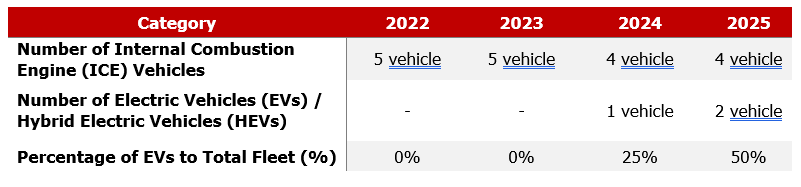
The Company aims to reduce fossil fuel consumption from internal operations by gradually converting some vehicles to Electric Vehicles (EVs) and Hybrid Electric Vehicles (HEVs) to enhance energy efficiency and reduce greenhouse gas emissions from business travel. The Company has established a continuous vehicle conversion plan based on suitability and technological readiness.
Concurrently, the Company implements systematic waste management projects, such as waste separation at the source, promoting reuse, and donating usable items, to increase the recycling rate and reduce the amount of waste sent to landfills, thereby supporting the organization's overall environmental impact reduction goals.
Long term (5–10 years)
The Company aims to convert 100% of its organizational vehicles to Electric Vehicles (EVs) and develop the organization into a Green Office with a comprehensive waste management system, such as Zero Waste to Landfill.
Scope 2: Indirect Emissions from Energy Consumption (Scope 2)
Short term (1–3 years)
The Company aims to reduce electricity consumption in its offices by at least 5% through energy efficiency measures, such as campaigns to raise awareness about energy saving and the selection of high-efficiency equipment.
Long term (5–10 years)
Expand the target for electricity consumption reduction to at least 10%, while also studying the feasibility of using alternative or renewable energy to increase the proportion of clean energy in business operations.
Scope 3: Other Indirect Emissions (Scope 3)
Short term (1–3 years)
The Company has established supplier selection guidelines, considering sustainability factors, including environmental, social, and governance (ESG) practices, as part of its procurement process.
Long term (5–10 years)
The Company aims to foster collaboration with trade partners and business allies to collectively reduce greenhouse gas emissions throughout the value chain and continuously develop mechanisms for carbon monitoring and reporting.
GHG — Emissions
GHG Emissions
| Metric | Current Year | Previous Year |
|---|---|---|
| Total GHG emissions (Metric tonnes of carbon dioxide equivalent) | 115.11 | 124.04 |
| Total greenhouse gas emissions 1 (Metric tonnes of carbon dioxide equivalent) | 28.79 | 39.71 |
| Total greenhouse gas emissions 2 (Metric tonnes of carbon dioxide equivalent) | 86.32 | 84.33 |
| Total greenhouse gas emissions 3 (Metric tonnes of carbon dioxide equivalent) |
GHG — Emissions Verification
Emissions Verified by a Third Party
No
GHG — Principles & Standards
Principles & Standards Applied
| Standard |
|---|
| 2672 |
| 2676 |
GHG — Targets
Has Set GHG Targets
Yes
GHG Targets — Other Targets
Other GHG Targets
| Emission Scope | Base Year | Base Year Emissions | Near-term Target Year | Near-term Target Change (%) | Long-term Target Year | Long-term Target Change (%) | Target Year | Target Change (%) | Unit |
|---|---|---|---|---|---|---|---|---|---|
| 2717 | 2,024 | 39.71 | 2,025 | 5 | 2,030 | 10 | 2,025 | 5 | Metric tonnes of carbon dioxide equivalent |
GHG — Performance & Outcomes
Has Performance Results
Yes
Performance Description
Greenhouse Gas Management for Reduction
The company recognizes the importance of greenhouse gas management, a critical factor affecting climate change and long-term business sustainability. It has established guidelines for managing greenhouse gas emissions from its operations, covering direct emissions (Scope 1), indirect emissions from energy consumption (Scope 2), and other indirect emissions (Scope 3). The company has also set targets to achieve Carbon Neutrality and Net Zero GHG Emissions by 2030.
The company implements greenhouse gas reduction measures by enhancing energy efficiency, reducing fossil fuel consumption, and transforming organizational travel patterns. This includes adopting electric vehicles (EVs) and hybrid electric vehicles (HEVs) to replace fossil fuel-powered cars, as well as developing work processes to be efficient and aligned with sustainable development guidelines.
Operational Performance
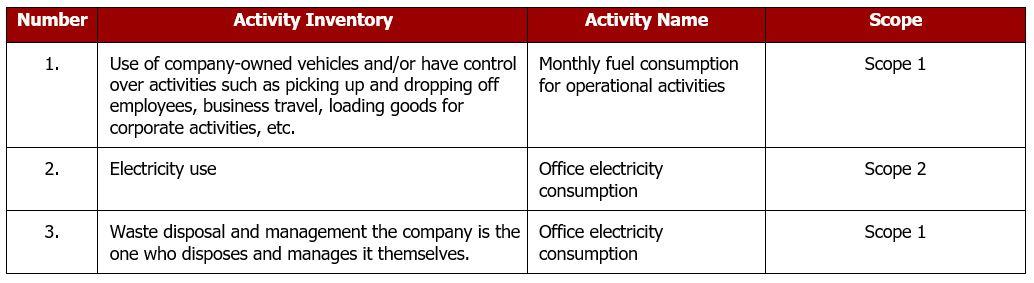
The company utilizes the SET Carbon system, developed by the Stock Exchange of Thailand, as a tool for managing and calculating its Carbon Footprint for Organization (CFO). This system systematically collects, stores, and processes greenhouse gas emission data from the company's operations in a transparent and verifiable manner. The system enables the company to comprehensively assess the impact of its business activities, covering three main types of activities:
Use of company-owned vehicles (Scope 1)
Electricity consumption in offices (Scope 2)
Waste disposal and management conducted by the company (Scope 1)
In 2025, the company's total organizational greenhouse gas emissions amounted to 115.11 tons of carbon dioxide equivalent (tCO2e), with the following emission proportions:
Scope 1 (Direct Emissions): 28.79 tCO2e, accounting for 24.99%
Scope 2 (Electricity Consumption): 86.32 tCO2e, accounting for 74.99%
Scope 1 (Waste Management): 0.02 tCO2e, accounting for 0.01%
Comparing Scope 1 emissions with the 2024 baseline of 39.71 tCO2e, a reduction of 10.92 tCO2e, or 27.49%, was achieved. This significantly exceeds the short-term target of 5% and the long-term target of 10%, demonstrating the effectiveness of the company's greenhouse gas reduction measures.
These achievements result from key measures, including the gradual transition of vehicles from fossil fuel systems to electric vehicles (EVs) and hybrid electric vehicles (HEVs), enhancing energy efficiency in offices, and promoting efficient resource utilization behaviors within the organization.
The company will continuously monitor, evaluate, and develop greenhouse gas reduction measures, with a focus on managing electricity consumption (Scope 2), which is the primary source of emissions. This is to support the achievement of Net Zero GHG Emissions by 2030 and foster long-term sustainable growth.
Environmental Legal Incidents
Legal Violation Incidents
| Metric | Current Year | Previous Year | Two Years Ago |
|---|---|---|---|
| Number of cases or incidents of legal violations or negative environmental impact (cases) | 0 | 0 | 0 |
Other Environmental Management
Plan Description
In the year In 2025, the Company continues to prioritize and promote continuous sustainability training to enhance the knowledge, understanding, and skills of employees at all levels, supporting the organization's long-term growth in a stable, transparent manner, and in alignment with its ESG goals
of the Company.
Employees — Plan & Guidelines
Has an Employee Management Plan
Yes
Plan Description
Compensation Management and Employee Retention Plan
The Company has a policy for fair, appropriate, and competitive compensation in the labor market, determined in alignment with the duties, responsibilities, and performance of employees in each position. The Company designs its compensation system based on principles of fairness, transparency, and non-discrimination, regardless of department, age, gender, or any other status, adhering to the principle of equity management to ensure equality for employees performing comparable work in terms of position level, responsibilities, and job complexity.
In addition, the Company emphasizes reviewing its compensation structure to a level that can attract and retain quality personnel, aligning with labor market conditions and organizational growth. It also systematically defines performance and competency evaluation systems to use evaluation results in determining appropriate, fair compensation that aligns with each employee's potential and responsibilities.
Objectives
To manage compensation and benefits fairly, transparently, and in line with employees' abilities and performance.
To reduce employee turnover and retain high-potential personnel within the organization in the long term.
Goals
To reduce the employee turnover rate to no more than 50% by 2025.
To increase employee satisfaction with compensation and benefits.
Guidelines and Implementation Measures
To provide basic and supplementary welfare benefits that cover employee needs.
To organize activities that foster relationships between employees and management, such as Townhalls.
To prepare turnover rate analysis reports to utilize data for developing employee retention policies.
To create an Engagement Survey to measure employee satisfaction levels.
Migrant Worker Management Plan and Child Labor Prevention
The Company places importance on the equal labor rights of all employees, strictly adhering to labor laws, international labor standards, and human rights practices. This includes appropriate, fair, and transparent management of migrant workers, as well as preventing the use of child labor, forced labor, and employment that does not comply with the law, in order to create a safe working environment that respects human dignity and promotes long-term sustainable business operations.
Objectives
To protect the human rights and labor rights of all employees in accordance with universal principles, without discrimination based on nationality, race, or any other status.
To prevent the use of child labor, forced labor, and employment that does not comply with relevant labor laws.
Goals
No child labor, forced labor, or employment that violates labor laws throughout the operational period.
To ensure that all employees, including migrant workers, are treated fairly, equally, and with respect for human dignity.
Guidelines and Implementation Measures
To treat all workers equally and without discrimination, adhering strictly to human rights principles and labor laws.
To verify qualifications and documents of job applicants before employment to comply with minimum age requirements and relevant labor laws.
To ensure migrant workers receive fair and appropriate wages, welfare, and working conditions equivalent to general employees.
No child labor, forced labor, or illegal labor is used, and operations that violate human rights are not supported.
To communicate human rights and labor policies and practices to employees and relevant parties to foster mutual understanding and reduce labor risks.
Employee Development Plan
The Company places continuous importance on developing the potential of employees at all levels, recognizing that human resources are a crucial factor in driving the organization to compete and grow sustainably in a rapidly changing business environment. Therefore, the Company aims to promote the development of necessary knowledge, skills, and competencies to enhance operational capabilities, increase work efficiency, and prepare personnel to confidently adapt to future changes.
Objectives
To enhance employees' knowledge, skills, and potential in line with business changes.
To promote employees' ability to perform effectively and achieve company goals.
Goals
To increase average training hours per employee by at least 10 hours/person/year.
To promote learning aligned with employees' duties and career paths (Job-Based Training).
Guidelines and Implementation Measures
To promote learning through online systems (E-Learning).
To develop curricula aligned with the needs at each level, such as foundational courses, specialized skills, and leadership programs.
To establish a learning outcome tracking system to evaluate results and plan further development.
Safety, Occupational Health, and Working Environment Plan
The Company recognizes the importance of safety, occupational health, and the working environment as fundamental factors directly impacting employees' quality of life, well-being, and work efficiency, as well as being a crucial foundation for sustainable business operations. Therefore, the Company is committed to creating a safe, standardized, and quality-work-conducive workplace, while also establishing systematic preventive measures and safety management systems to prevent accidents, injuries, and work-related illnesses, and continuously promoting a safety culture within the organization.
Objectives
To prevent work-related accidents and illnesses within the organization, which is a crucial issue for sustainable business operations.
To create a safe, standardized working environment that promotes employees' health and quality of life.
Goals
To continuously reduce the rate of work-related accidents to zero (Zero Accident) every year.
Guidelines and Implementation Measures
To establish a safety, occupational health, and working environment policy to serve as a framework for operations and to prevent potential work-related risks.
To assign the Human Resources Department and relevant units responsibility for safety, occupational health, and working environment operations, with monitoring and reporting to Ms. Narita Adulkeawpaluek, Executive Director and Senior Vice President of Central Administration, and to the Sustainable Development Governance, Nomination, and Remuneration Committee for policy-level oversight.
To prioritize the safety of employees working at client sites and consider safety, occupational health, and working environment measures at the operational sites, as well as operations involving contractors or external stakeholders.
To arrange for safety inspections and reviews by the Safety, Occupational Health, and Working Environment Committee to assess risks and establish appropriate preventive measures.
To systematically consider and assess safety and occupational health risks, covering both ongoing activities and new activities or projects that may arise in the future (due diligence). In the case of investments and mergers, the Company conducted health and safety risk assessments before and after investing in Biz Resource Co., Ltd. To ensure that operations comply with the occupational health and safety standards of the group of companies, and to adequately prepare, prevent, and mitigate potential impacts from operations. Annual health check-ups, training, and safety promotion activities are provided to raise awareness and encourage employee participation in maintaining health and safety at work.
To continuously monitor and review safety and occupational health performance, comparing it against set targets to evaluate effectiveness and continuously improve operations.
Disability Employment Promotion Plan
The Company recognizes the importance of promoting equality, diversity, and non-discrimination in the workplace. It is committed to providing appropriate employment opportunities for persons with disabilities and enabling their equal participation in creating value for the organization. Therefore, the Company has developed a Disability Employment Promotion Plan to support the development of potential for persons with disabilities, create a collaborative work environment, and foster sustainable growth for the organization and society as a whole.
Objectives
To promote equality and inclusion of persons with disabilities in the workplace.
To provide opportunities for persons with disabilities to access employment and demonstrate their potential in a suitable manner.
Goals
The number of employed persons with disabilities complies with the legally mandated proportion.
Guidelines and Implementation Measures
To coordinate with relevant government and private organizations, such as the Department of Skill Development, foundations for persons with disabilities, or employment support agencies, to access potential disabled workers suitable for job positions.
To consider, select, and allocate suitable job positions for persons with disabilities based on their abilities and limitations, enabling them to perform effectively and achieve maximum benefit for both employees and the organization.
To facilitate throughout the employment period to ensure safety and convenience in performing duties.
To regularly monitor, evaluate, and review the implementation of disability employment initiatives, using the results to continuously improve operational guidelines for efficiency and alignment with the company's goals.
Plan Areas
| Plan Area |
|---|
| Fair employee compensation |
| Employee training and development |
| Promoting employee relations and participation |
| Migrant/foreign labor |
| Child labor |
| Occupational health and safety in workplace |
Employees — Workforce
Workforce Data
| Metric | Current Year | Previous Year | Two Years Ago |
|---|---|---|---|
| Total number of employees (Persons) | 578 | 589 | 590 |
| Number of male employees (Persons) | 166 | 167 | 176 |
| Number of female employees (Persons) | 412 | 422 | 414 |
| Total employment of disabled persons (people) | 197 | 178 | 164 |
| Total disabled employees (people) | 197 | ||
| Total male disabled employees (people) | 104 | ||
| Total female disabled employees (people) | 93 | ||
| Total disabled workers who are non-employee (people) | 0 | ||
| Contributions to the fund for promoting and improving the quality of life for disabled persons | 1 | ||
| Total number of male employees in operational level (Persons) | 148 | 152 | 163 |
| Total number of male employees in management level (Persons) | 12 | 10 | 8 |
| Total number of male employees in executive level (Persons) | 6 | 5 | 5 |
| Total number of female employees in operational level (Persons) | 382 | 399 | 390 |
| Total number of female employees in management level (Persons) | 21 | 15 | 17 |
| Total number of female employees in executive level (Persons) | 9 | 8 | 7 |
Employees — Remuneration & Provident Fund
Introduction
The company has a policy of providing fair, appropriate, and competitive employee compensation in the labor market. This is determined in alignment with the duties, responsibilities, position level, and performance of each employee. Furthermore, the company has established a compensation structure based on principles of fairness, transparency, and non-discrimination, regardless of department, age, gender, or any other status. It adheres to the principle of equity to ensure that employees performing comparable roles in terms of responsibility level, job characteristics, and complexity receive appropriate and equal compensation. Regarding employee compensation in 2025, it refers to the compensation paid by the company to employees during the 2025 fiscal year, which covers compensation components based on the benefits and performance of each employee, including regular salary, performance-based bonuses, welfare benefits paid through the payroll system, performance commissions, and overtime pay. Such compensation payments are in accordance with the company's human resource management policies, criteria, and guidelines.
Note: Employee remuneration for the year 2025 excludes other benefits, such as financial assistance, including medical expenses and death benefits.
Remuneration & Provident Fund
| Metric | Current Year | Previous Year | Two Years Ago |
|---|---|---|---|
| Total disabled employees (people) | 309,408,236.37 | 290,908,082.21 | 280,396,191.75 |
| Total male employee remuneration (Baht) | 198,918,967.47 | ||
| Total female employee remuneration (Baht) | 110,489,268.9 | ||
| Number of employees eligible to participate in PVD (persons) | 520 | 550 | 387 |
| Total number of employees joining employee provident fund (Persons) | 246 | 246 | 222 |
| Percentage of total number of employees joining employee provident fund to total number of employees (%) | 42.56 | 41.77 | 37.63 |
| Number of PVD members / Total eligible employees (%) | 47.31 | 44.73 | 57.36 |
| Total amount of provident fund contributed by the Company (Baht) | 6,323,444.97 | 5,013,480.43 | 4,934,907 |
| Total amount of provident fund contributed by employee (baht) | 10,106,650.9 |
Employees — Training & Development
Training Data
| Metric | Current Year | Previous Year | Two Years Ago |
|---|---|---|---|
| Average employee training hours (Hours / Person / Year) | 10.13 | 5.63 | 10 |
| Employee development and training expenses (baht) | 774,765.22 | 499,318.45 | 674,820.5 |
Employees — Occupational Health & Safety
Occupational Health & Safety Data
| Metric | Current Year | Previous Year | Two Years Ago |
|---|---|---|---|
| Total number of lost time injury incidents by employees (Cases) | 0 | 0 | 0 |
Employees — Labour Relations
Labour Relations Data
| Metric | Current Year | Previous Year | Two Years Ago |
|---|---|---|---|
| Total voluntary resignations (Persons) | 257 | 252 | 390 |
| Male employees who voluntary resigned (Persons) | 70 | ||
| Female employees who voluntary resigned (Persons) | 187 | ||
| Percentage of employee turnover leaving the Company voluntarily (%) | 44.46 | 42.78 | 66.1 |
| Evaluation result of employee engagement | 1 | 1 | 1 |
Employees — Employee Representation
Employees Are Represented Collectively
Yes
Forms of Representation
| Form |
|---|
| Welfare committee |
Employees — Targets
Has Set Employee Targets
Yes
Targets
| Indicator | Target Areas | Base Year | Base Year — Description | Target Year | Target Year — Description |
|---|---|---|---|---|---|
| Workplace accidents | 2988 · Description: Safety and occupational health at work | 2,024 | Zero work-related accidents | 2,025 | Zero work-related accidents |
| Average training hours per employee (hours / person / year) | 2984 · Description: Employee training and development | 2,024 | Average training hours per employee (hours / person / year) = 10 hours | 2,025 | Average training hours per employee (hours / person / year) = 10 hours |
| Employee turnover rate | 2985 · Description: Promoting employee relations and participation | 2,024 | The employee turnover rate is 42.14%. | 2,025 | Maintain employee turnover rate at 50 percent in 2025. |
Employees — Performance & Outcomes
Has Performance Results
Yes
Performance Description
Personnel Development
The Company recognizes the value of human resources, believing that employees are crucial assets for the organization to achieve its goals. The Company plans training and development programs to enhance personnel knowledge, expertise, and ability to successfully perform their duties. The Company provides all employees with access to self-learning and development through its online E-Learning system, which offers over 400 courses. The Human Resources Department organizes both internal and external training, designing courses appropriate for various job functions and performance levels, such as Effective Communication, Leader as a Coach, and Growth Mindset. This approach to personnel development aligns with the organization's Core Value: "Be Better, Move Faster, Think of Other," which focuses on employees improving themselves daily to enhance work efficiency and support others, including colleagues, supervisors, and clients, to achieve collective success.
The average training hours per employee per year from 2022 to 2025 are as follows:
2022: Average training hours were 2.30 hours/person/year.
2023: Average training hours were 10.00 hours/person/year.
2024: Average training hours were 5.63 hours/person/year.
2025: Average training hours were 10.13 hours/person/year.
Employee Compensation and Benefits
The Company adheres to the principle of equality in compensation management, considering employee abilities and performance to ensure fair remuneration aligned with their duties. It also efficiently manages employee welfare benefits to create a good quality of life and a sense of security within the organization. Furthermore, it aims to motivate employees and make them feel valued within the organization, which are crucial factors in fostering satisfaction and long-term employee retention.
In terms of employee retention, the Company emphasizes analyzing the Employee Turnover Rate to identify reasons for departure and develop effective measures to reduce it. The Company conducts exit interviews to gather data and feedback that can be used to improve and develop the working environment, such as enhancing welfare benefits and fostering good relationships with all employees, to ensure employee satisfaction and readiness to further develop their work potential.
The Company has established a welfare committee to allocate beneficial welfare benefits for employees, including:
Provident Fund: Employees can apply for the provident fund, with contribution rates ranging from 3% to a maximum of 15%.
Annual Leave: Leave days are divided into:
Sick leave: 30 days/year
Annual leave as stipulated by company regulations, not less than legally mandated, and a maximum of 20 days.
Personal leave: 3 days
Employer-Employee Joint Investment Program (EJIP)
Financial assistance for various occasions
Life insurance and group health insurance
Discounts on products from partners
GH Bank Home Loan
Employee Turnover Rate
The Company has set human resource management goals aimed at reducing employee turnover to an appropriate level to retain high-potential personnel and ensure business continuity. The goals and performance regarding the employee turnover rate from 2022 to 2025 are presented as follows: The goals and performance regarding the employee turnover rate from 2022 to 2025 are detailed below.
Goals : Employee turnover rate not exceeding 50% in 2025.
Operational Performance :
2022: Employee turnover rate was 58.58%.
2023: Employee turnover rate was 66.1%.
2024: Employee turnover rate was 42.14%.
2025: Employee turnover rate was 47.36%.
* Turnover rate calculation method = Number of voluntary resignations / Average number of employees per year
Based on the above data, in 2025, the employee turnover rate slightly increased from 2024. The overall turnover is attributed to changes in the working environment and competition in the labor market. The Company will use this analysis to continuously review its human resource policies and define employee retention strategies to strengthen human resource stability and support the organization's long-term sustainable growth.
Additionally, in 2025, the Company conducted an Employee Engagement Survey to gather feedback and utilize the survey results to further improve the working environment, personnel development, and welfare benefits to better align with employee needs. The survey results for 2025 were at the level of 3.5 out of 5 points (equivalent to 70%) reflecting a generally good level of overall satisfaction and engagement with the organization. The Company has continuously used these evaluation results to review and improve human resource management. In the past year, the Company has regularly organized activities to promote employee engagement, such as:
Town Hall activities twice a year To communicate the vision, organizational direction, and operational performance, providing employees with opportunities to express opinions and exchange ideas, fostering a transparent and participatory organizational culture. Additionally, to recognize and commend outstanding employee achievements, convey inspiration, and promote behaviors aligned with organizational values.
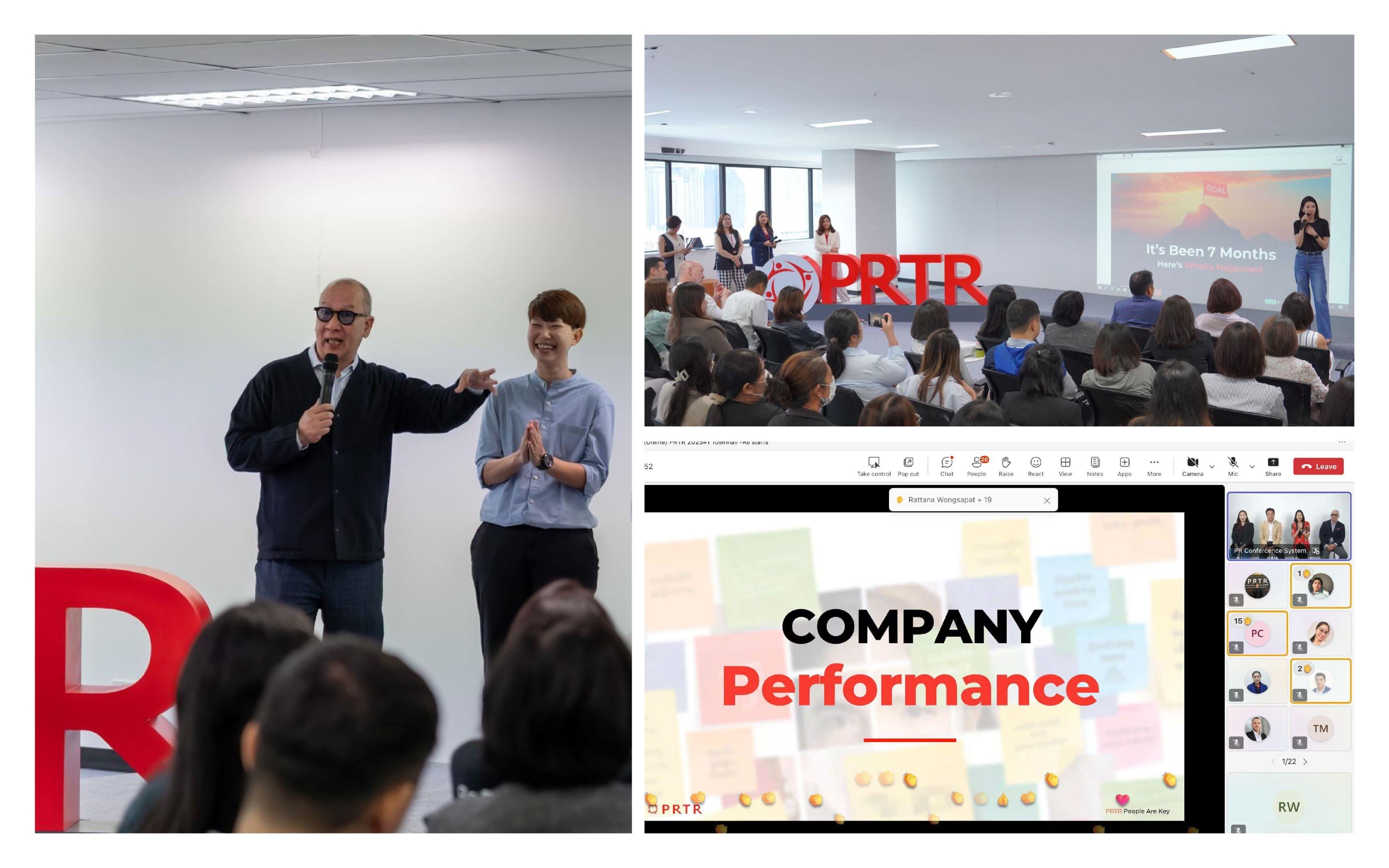
Valentine: Token of Love activity on February 14, 2025, to promote a friendly work environment, strengthen employee engagement, and support mental well-being in the workplace.

Uncensored Voices activity to provide a platform for employees to openly express their opinions, feelings, and suggestions, fostering an open, transparent, and employee-listening organizational culture, and strengthening confidence in internal communication.

PRTR Open House on Friday, March 14, 2025: Operational performance update, Meet & Greet with the management team, opportunity to connect with colleagues from all business units (Crossed BU), Q&A Session with executives to address all inquiries.
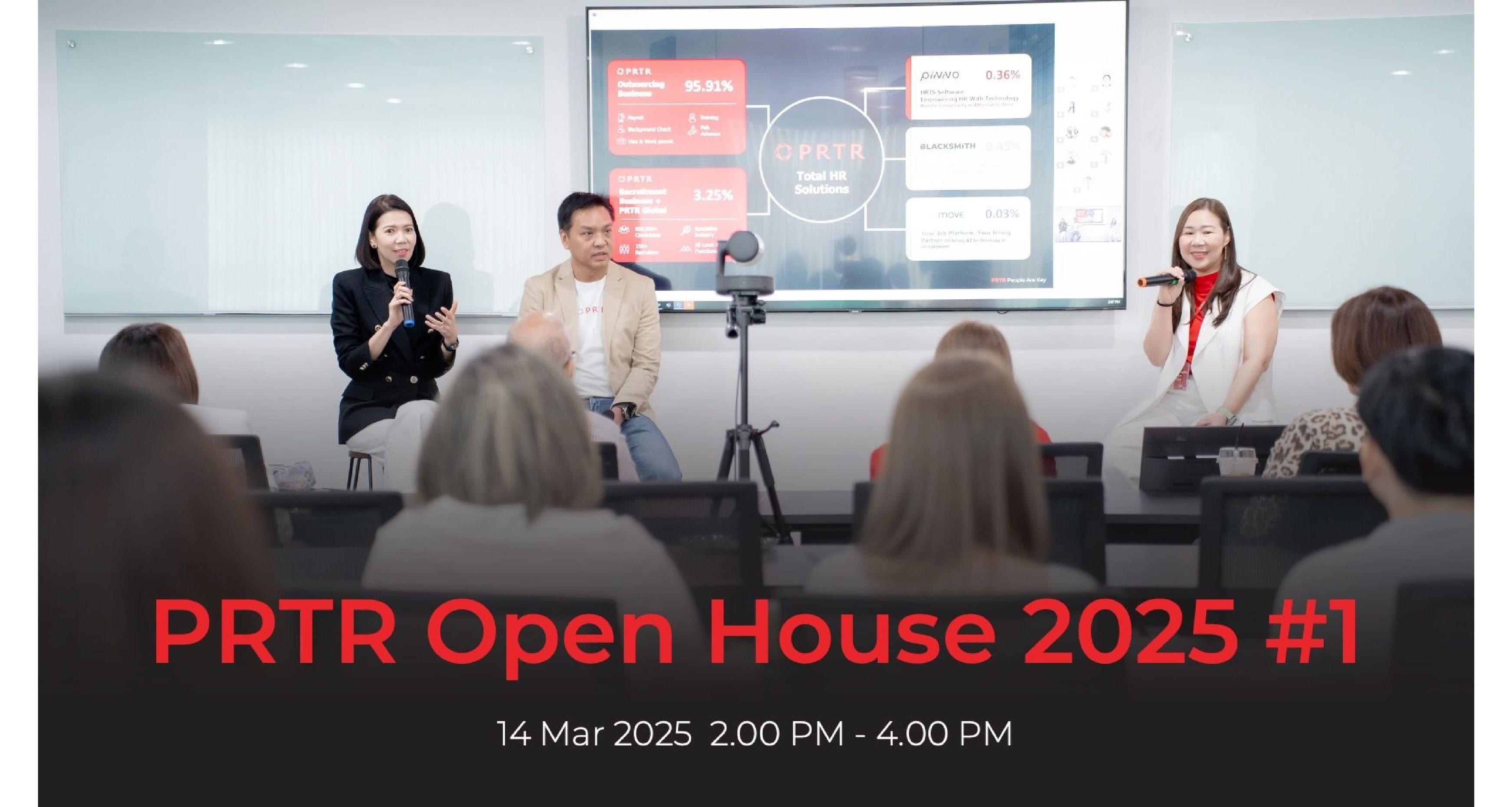
The "This is Us. This is PRTR" campaign aims to promote employee engagement and reflect the organizational identity by inviting employees to share their stories and perspectives in short captions, linking them to one of the four core organizational values: Playful, Result, Trust, and Respect. This helps foster a shared understanding of organizational values, builds pride, and promotes a work culture that respects diversity and openness, also reflecting 'how we work'.
P - Playful: We are dedicated and fully enjoy our work.
R - Result: Effort to achieve the best possible outcome.
T - Trust: We work as a team with trust, not control.
R - Respect: Valuing every voice and prioritizing everyone.
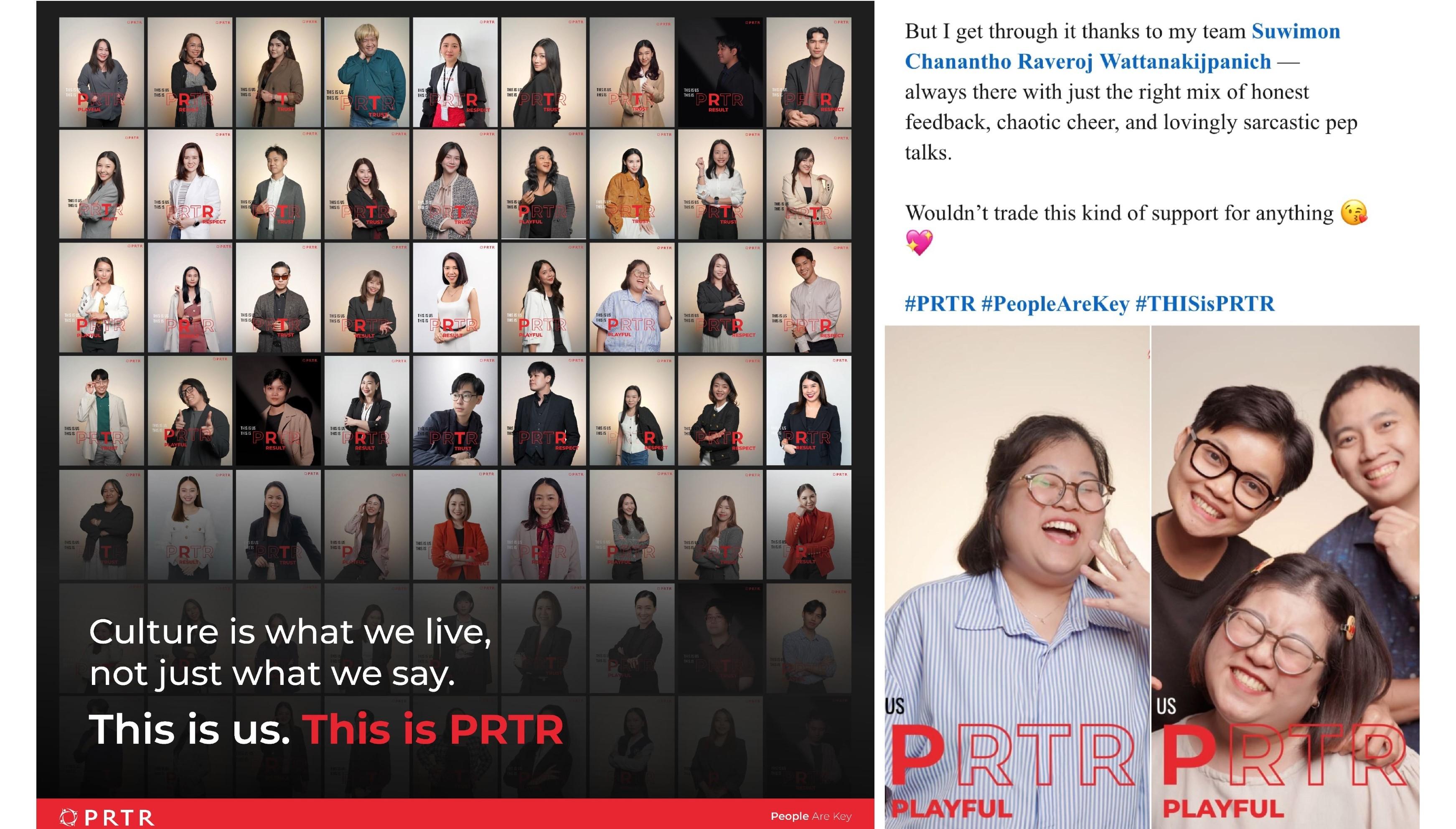
Halloween activity under the theme "International Ghosts 2025" on October 31, 2025, to foster good relationships among employees and create a friendly and creative work atmosphere. The event included a creative costume contest, thrilling photo booth corners, a mysterious puzzle room, and fortune-telling, with prizes totaling over 5,000 Baht. This activity helped promote relaxation, unity, and a sense of belonging to the organization, contributing to positive employee engagement and organizational culture.

PRTR Star Crew This campaign was organized to concretely promote the application of the organizational value "Think of Others" in the workplace. It began with an Open House activity to build understanding of the concept and its practical application in the work context. Subsequently, a platform was provided for employees to propose ideas and projects through teamwork, emphasizing stakeholder considerations. The campaign aims to encourage employees to participate in presenting ideas and developing innovations that enhance work efficiency and service quality, with awards given to outstanding and implementable works totaling over 100,000 Baht.

Activities “Healing Card” The "Healing Card" activity was organized to promote employees' mental well-being by providing a safe space to take a break from daily stress and reflect through conversations with professional listeners. The activity helped foster relaxation, boost morale, and support work efficiency, taking place on November 26, 2025.

Activities “Listen with Ears, See with Heart (Deep Listening)” On the occasion of the National Month of Listening, the organization held an activity to promote deep listening skills and empathetic communication for employees at all levels. This activity supported effective collaboration and fostered a positive organizational culture, taking place on November 26, 2025.
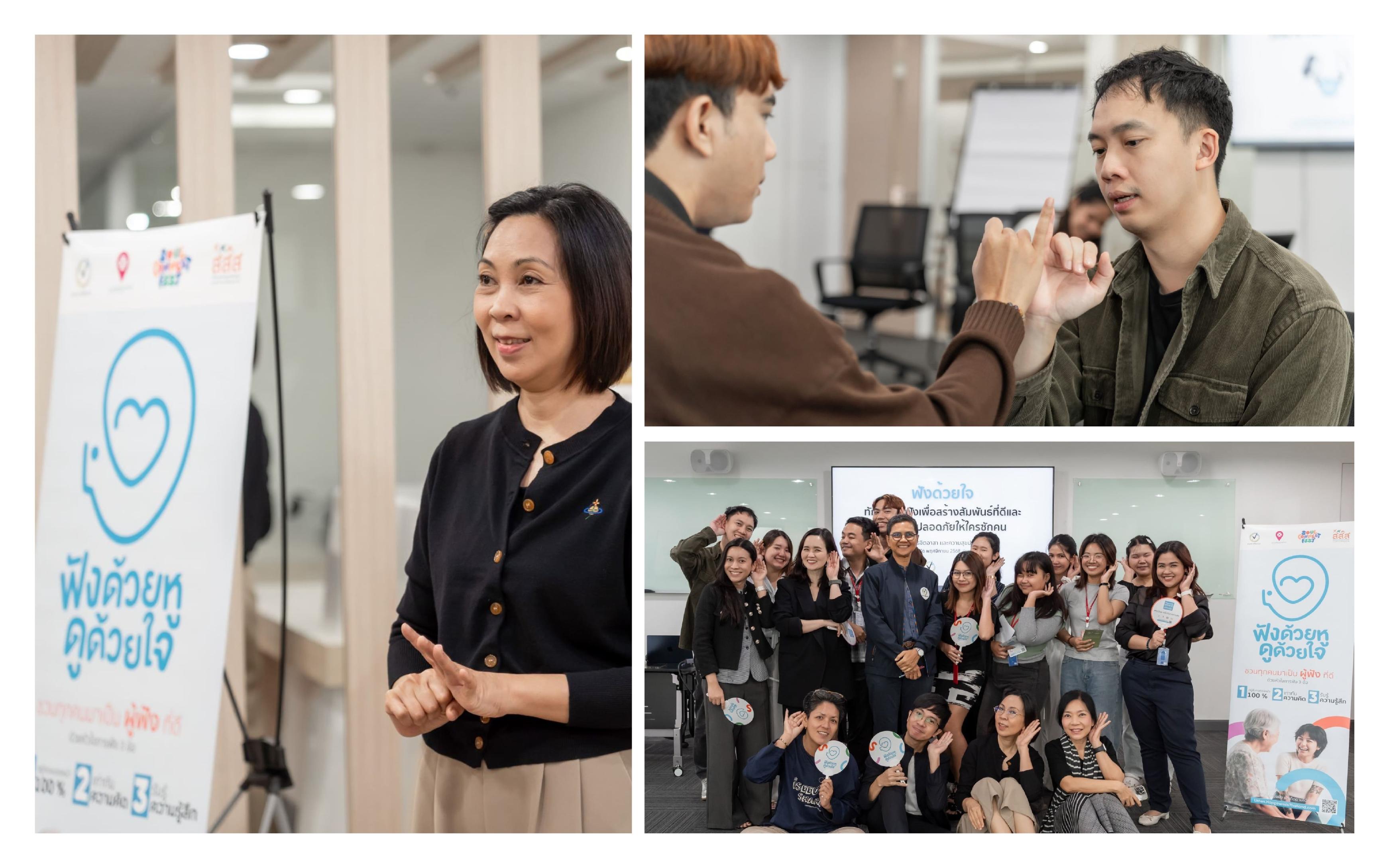
Survey and assistance for those affected by the flood situation on November 26, 2025, by providing 10,000 Baht per person to alleviate hardship and support urgent quality of life recovery.
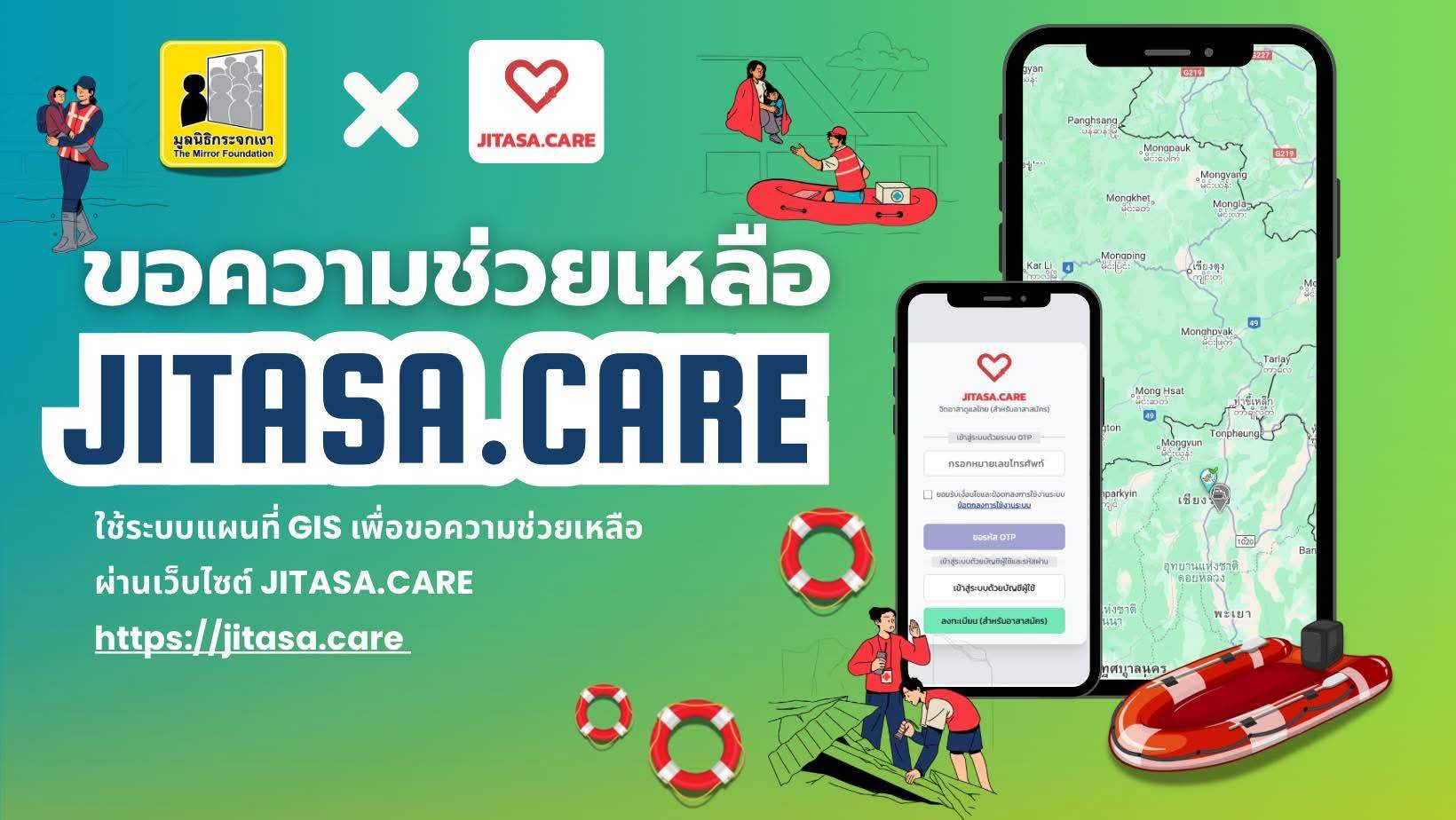
Activities Staff Party "PRTR GALA NIGHT 2025" under the concept "Let's Shine and Celebrate Together" was held to promote employee engagement, foster a friendly work atmosphere, and provide an opportunity for all employees and executives to celebrate successes together. The event included "PRTR Got Talents" activities to offer a platform for employees to showcase their special abilities, creating participation and pride in the organization. The event took place on December 12, 2025.

Operational Results
Through the implementation of projects, training development, and various activities aimed at developing and promoting employee engagement and instilling organizational values, the Company has consistently received positive feedback and evaluation results from participants. This reflects the perceived value and benefits of these activities in terms of participation, learning, and strengthening organizational culture. The key outcomes can be summarized as follows:
Employees have comprehensive and continuous access to learning and skill development opportunities through the E-Learning system and training courses designed to suit their job functions and position levels. This enhances their knowledge, expertise, and essential operational skills, enabling them to work efficiently and create added value for the organization, in line with organizational goals.
Employees have confidence in the organization's commitment to their quality of life and well-being at work, encompassing physical, mental, and job security aspects. This promotes overall well-being and supports employee work efficiency.
Employees participate in communication and idea exchange through various organizational activities, fostering a positive work environment, strengthening relationships, and a sense of belonging. Simultaneously, employees receive emotional and mental well-being support and have a platform to express their opinions, leading to the concrete cultivation of organizational values and collaborative work practices.
Safety, Occupational Health, and Working Environment
The Company has provided employee care in terms of safety, occupational health, and working environment by setting a target of zero work-related accidents and illnesses. The operational performance from 2022 to 2025 is as follows:
2022: Number of work-related accidents or illnesses was zero (0 incidents).
2023: Number of work-related accidents or illnesses was zero (0 incidents).
2024: Number of work-related accidents or illnesses was zero (0 incidents).
2025: Number of work-related accidents or illnesses was zero (0 incidents).
The aforementioned data indicates that from 2022 to 2025, the Company recorded zero work-related accidents or illnesses, in line with its set targets. This demonstrates a commitment to systematically and continuously managing safety, occupational health, and the working environment. This performance is a result of implementing appropriate safety measures and emergency preparedness. Furthermore, the Company has provided employee care through various projects as follows:
Annual Health Check-up Project The Company organized annual health check-ups for all employees on November 13–14, 2025, to monitor and assess health risks that may arise from work and lifestyle behaviors. Health data is also used as a guideline to promote preventive care and further improve the working environment to better suit employees.
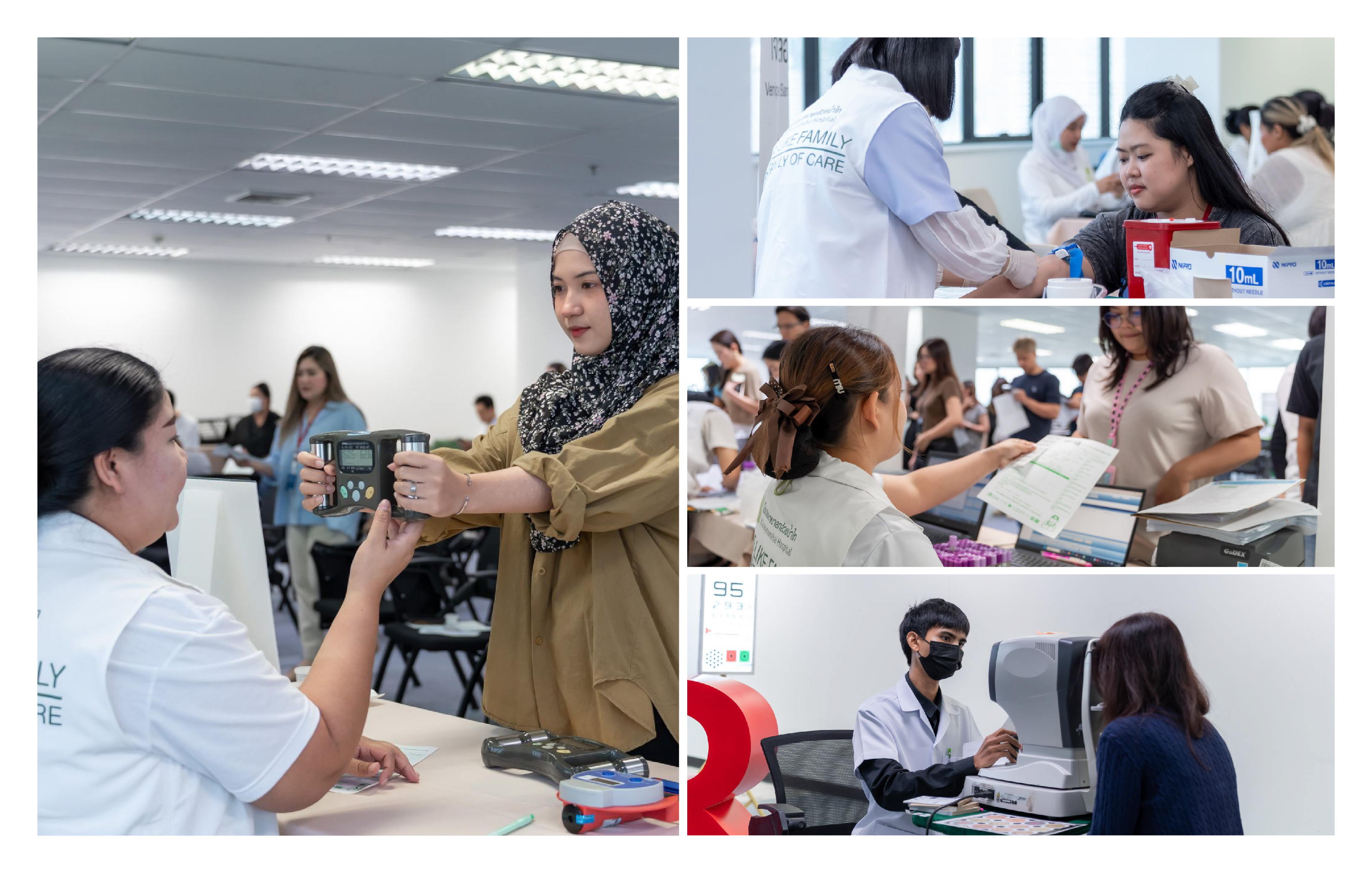
Fire Evacuation Drill Project The Company required all employees to participate in a fire evacuation drill held on May 30, 2025, to ensure they have the knowledge, understanding, and readiness to act correctly in the event of a fire. This includes learning evacuation routes and safety procedures within the building, thereby enhancing safety, reducing risks to life and property, and increasing preparedness for real emergency situations.
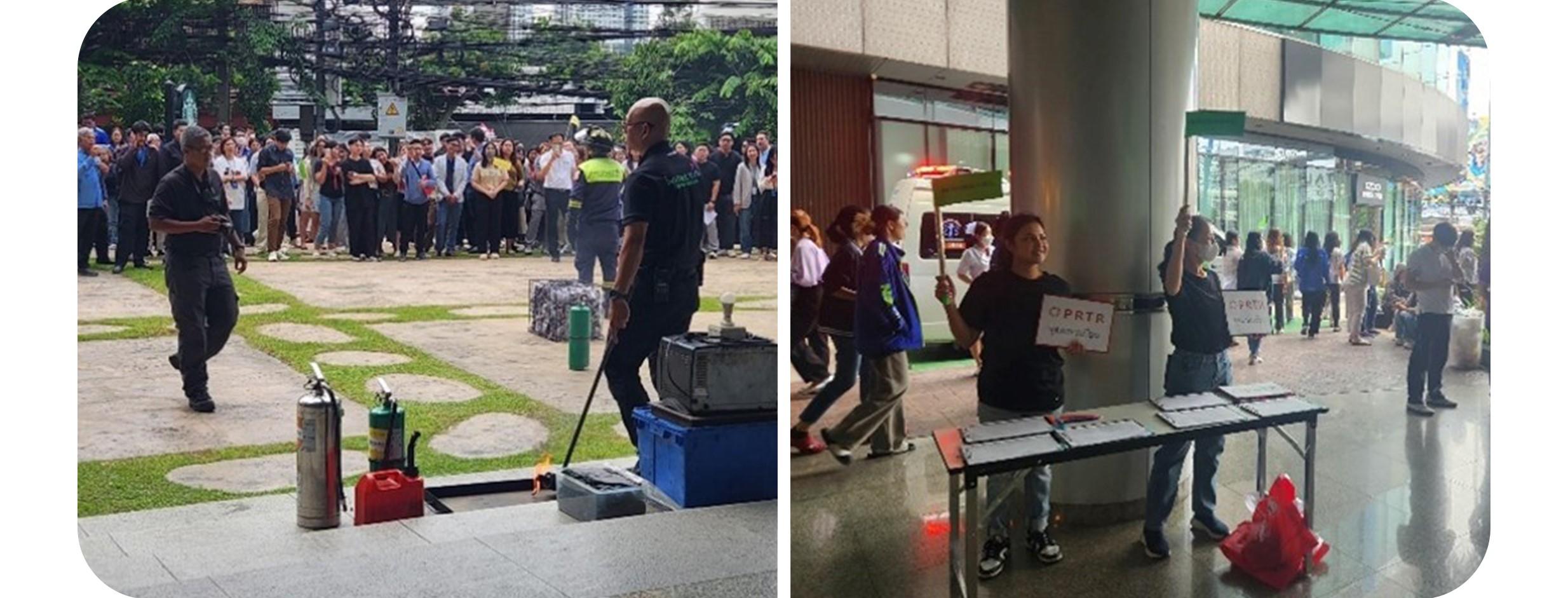
Annual Earthquake Evacuation Drill Project The Company participated in an earthquake evacuation drill, organized by the office building owner, on October 30, 2025. This was to raise awareness about unexpected disasters and prepare employees to act correctly, calmly, and safely in emergency situations, as well as to reduce panic and potential losses during a crisis.
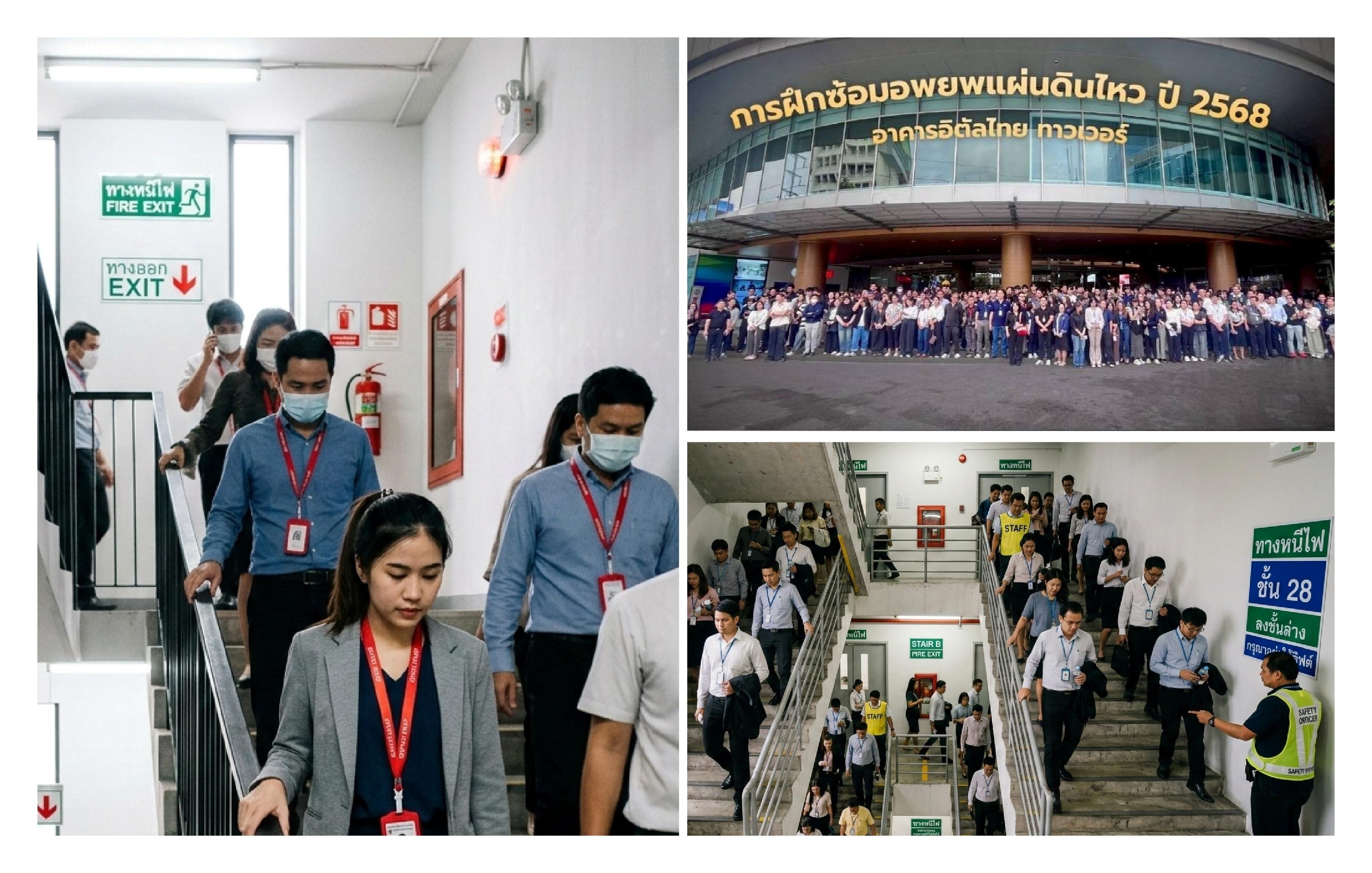
Installation of Automated External Defibrillators (AEDs) and Basic First Aid Equipment Project The Company has installed Automated External Defibrillators (AEDs) and first aid equipment at its offices to enhance preparedness for health emergencies, such as sudden cardiac arrest, and to enable timely assistance before medical professionals arrive.
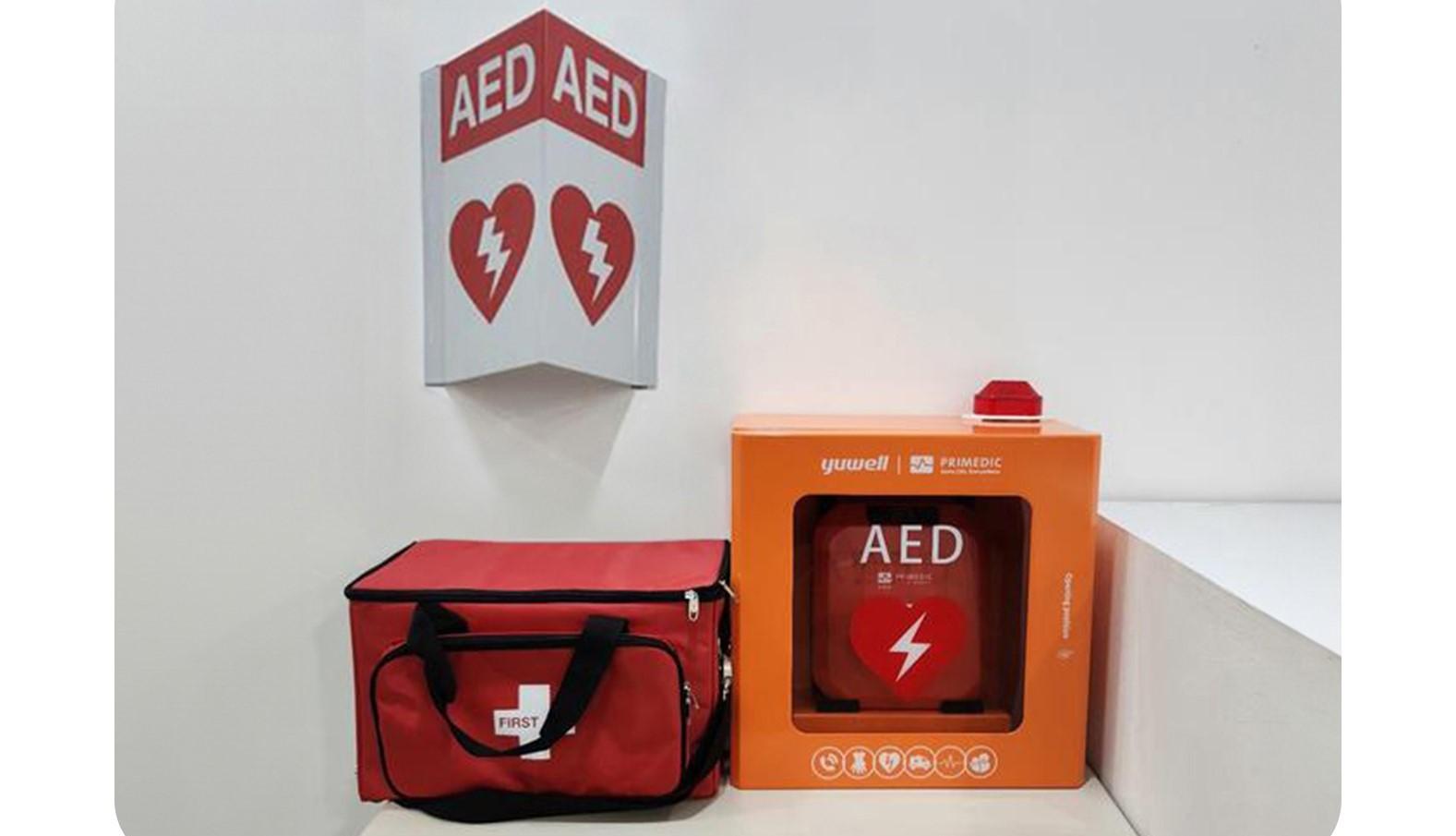
Basic Life Support (BLS Training / CPR) Project The Company organized BLS Training (Basic Life Support) and CPR on May 22–23, 2025, to equip employees with the knowledge, understanding, and basic skills to assist individuals in health emergencies, such as unconsciousness or sudden cardiac arrest. This enhances confidence and readiness to provide life-saving aid before medical professionals arrive.
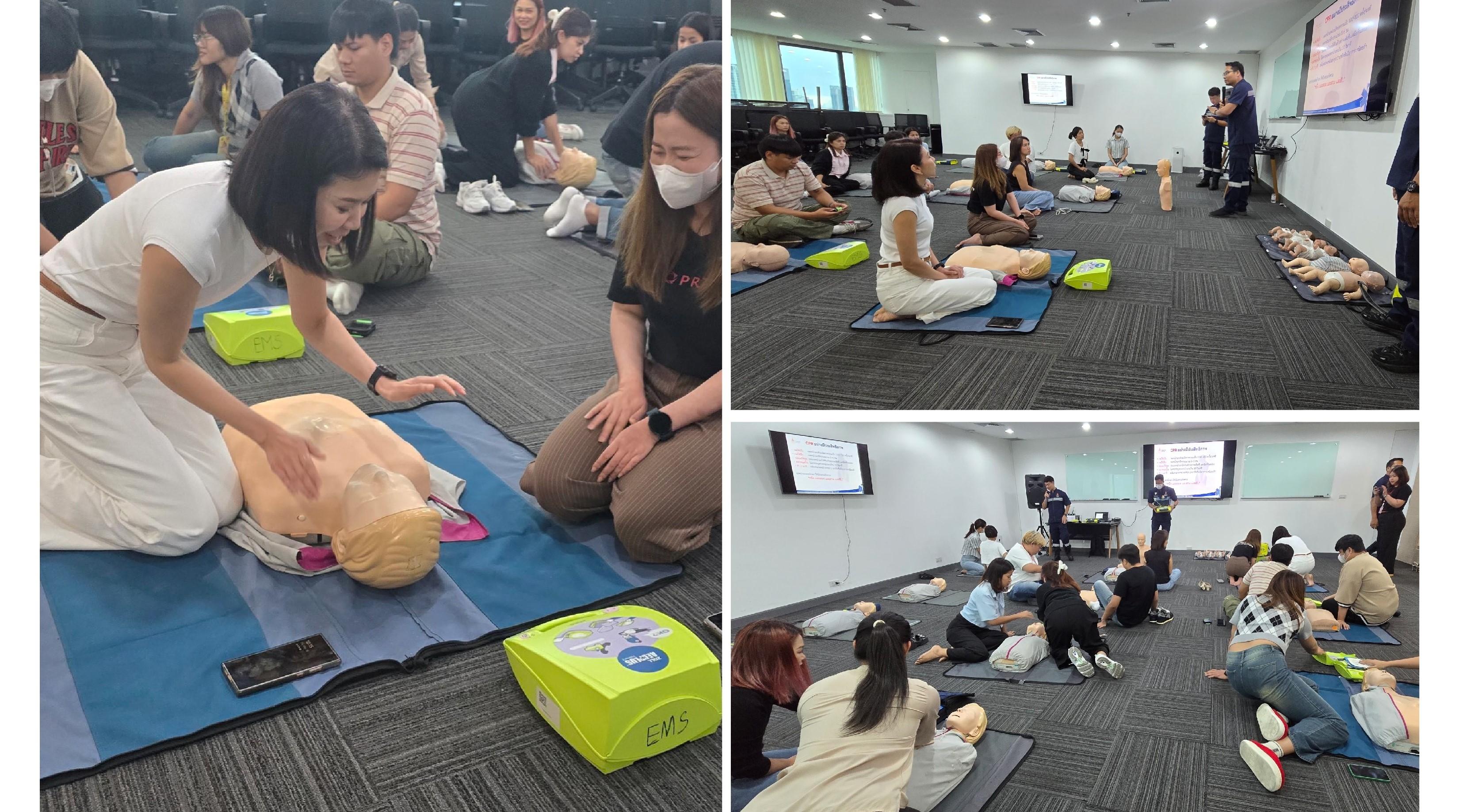
Free Massage for PRTR Staff Project The Company organizes a relaxation massage project for all employees to promote physical and mental health, reduce work-related stress, and alleviate fatigue from prolonged static postures. This is part of fostering overall well-being and creating a work-life balance.

Health promotion activities through sports clubs The Company supports the establishment of sports clubs, namely the Running Club and Badminton Club, to promote regular exercise, enhance physical health, foster unity, and build good relationships among employees, as well as support long-term health-conscious behaviors.
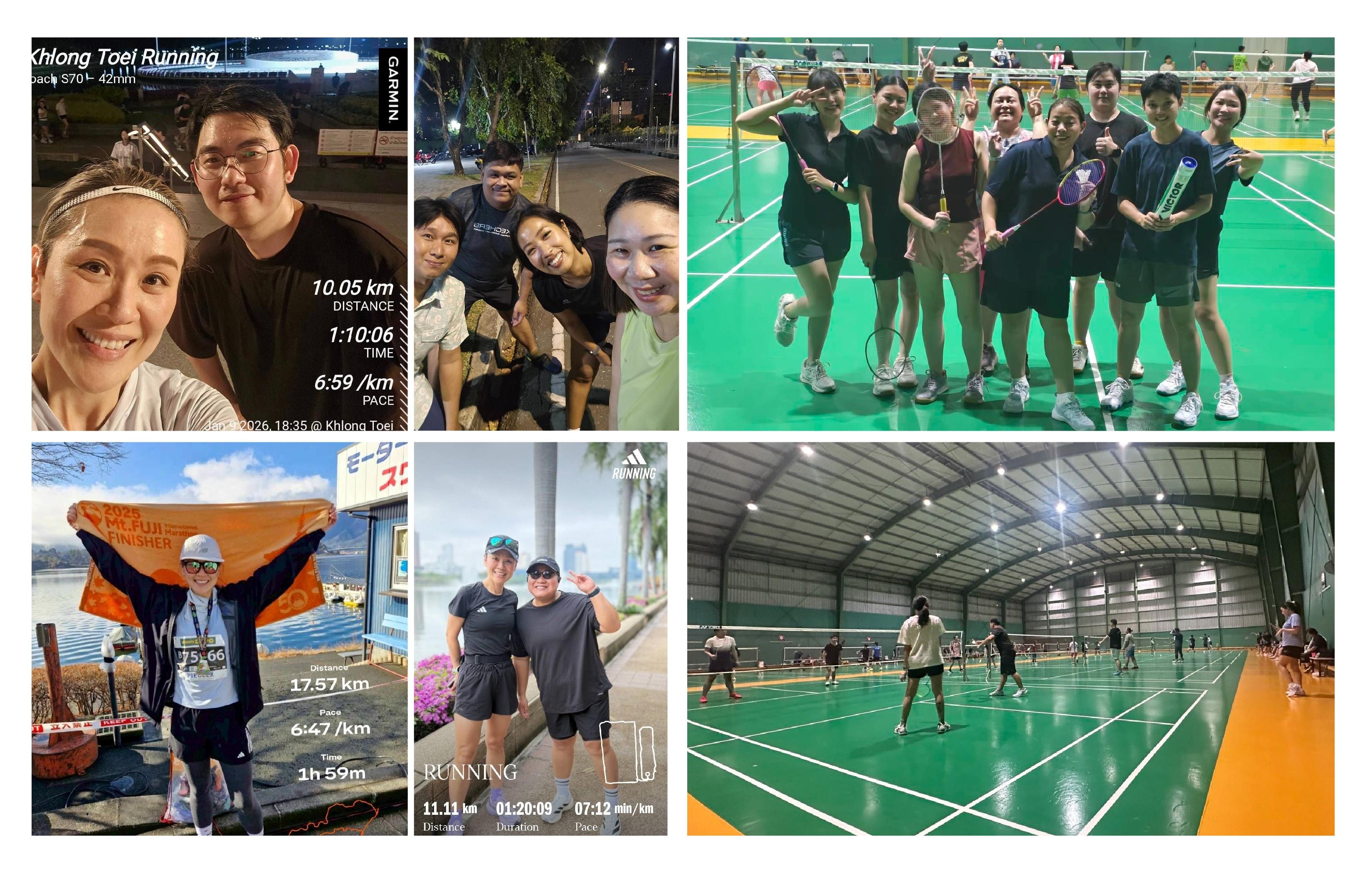
Behavioral and Work Environment Outcomes
The implementation of these projects enhances employee safety and health awareness, equipping employees with the knowledge, readiness, and confidence to handle emergency situations. It also promotes continuous health-conscious behaviors and supports a safe working environment conducive to efficient and sustainable work.
Promotion of Employment for Persons with Disabilities
The Company prioritizes conducting business under the principles of Diversity, Equity, and Inclusion (DEI), aiming to create fair employment opportunities for persons with disabilities so they can fully utilize their potential and contribute equally to the organization's value creation. The Company has systematically developed a plan to promote the employment of persons with disabilities, setting a target to ensure their employment aligns with the proportions stipulated by law under the Persons with Disabilities Empowerment Act. It continuously strives to maintain compliance with these requirements and considers approaches to promote employment beyond the minimum requirements to create a sustainable positive impact on society in the long term.
Operational Results
In 2025, the Company employed 197 persons with disabilities in accordance with Section 33 of the Persons with Disabilities Empowerment Act and fully complied with legal requirements by contributing funds to the Persons with Disabilities Empowerment Fund for 2025 in the amount of 364,944.45 Baht
Customers — Plan & Guidelines
Has a Customer Management Plan
Yes
Plan Description
Customer Relationship Management
Customer relationship management is one of the company's key strategies for building sustainable satisfaction and trust in the long term. The company aims to develop close relationships with customers through various communication channels, emphasizing timely, efficient, and transparent responses to customer needs, suggestions, and complaints. Customer care is not limited to problem-solving but also focuses on creating positive experiences through open communication and continuous engagement.
The company regularly holds meetings with customers to directly gather feedback and suggestions, which helps in clearly understanding customer needs, issues, and expectations. This platform is also utilized as an opportunity to develop and improve services, by collecting information from all relevant parties and systematically monitoring the implementation of suggestions, to ensure practical application and alignment with customer requirements.
Regarding the protection of personal data and customer information confidentiality, the company prioritizes the safeguarding of personal data and cybersecurity. It strictly adheres to the company's Information Technology Security Policy and Personal Data Protection Policy (PDPA) to prevent risks such as unauthorized access, leakage, hacking, alteration, or loss of data. Disclosure of information will only occur when required by law.
Performance Results for 2025
The company has not found any confirmed complaints regarding the violation of customer privacy or cases of personal data loss and leakage. Furthermore, there have been no complaints from service users concerning non-compliance with relevant regulations or laws.
The company conducted its annual customer satisfaction survey in 2025 to utilize the evaluation results for continuous development and improvement of service quality. The average customer satisfaction score was 4.09 out of a maximum of 5.00, an increase from 4.05 in 2024, reflecting a continuous trend of improving service quality and customer experience.
Additionally, customers can contact, complain, report issues, or provide service suggestions through the channels designated by the company. All suggestions and complaints will be reviewed, recorded, and reported to management to facilitate continuous and systematic improvement and development of services.
Plan Areas
| Plan Area |
|---|
| Development of customer satisfaction and customer relationship |
Customers — Satisfaction Results
Customer Satisfaction Results
| Metric | Current Year | Previous Year | Two Years Ago |
|---|---|---|---|
| Evaluation results of customer satisfaction | 1 | 1 | 1 |
Customers — Targets
Has Set Customer Targets
Yes
Targets
| Indicator | Target Areas | Base Year | Base Year — Description | Target Year | Target Year — Description |
|---|---|---|---|---|---|
| Renewal Rate | 3009 · Description: Development of customer satisfaction and customer relationship | 2,024 | Client contract renewal rate of at least 95% | 2,025 | Client contract renewal rate of at least 95% |
Customers — Performance & Outcomes
Has Performance Results
Yes
Performance Description
The Company aims to be a leader in providing comprehensive human resources services (Total HR Solutions). Therefore, it prioritizes developing comprehensive and standardized services, as well as integrating technology to enhance operational efficiency, in order to deliver superior services to customers.
Comprehensive Service Development
The Company has expanded its service offerings to provide more comprehensive, end-to-end human resource solutions. These include integrated learning services (both online and offline), a job platform, and a human capital management program. In 2024, the Company also launched PRTR Global, offering overseas recruitment services to meet market demand and broaden its service scope. In addition, in 2025, the Company acquired Biz Resource Co., Ltd., a provider of corporate drivers and cleaning staff, and commenced full operations to enhance its outsourcing capabilities with more specialized and comprehensive services. This strengthens the Company’s competitiveness and creates long-term business opportunities.
Integration of Technology to Support Operations
The Company is committed to leveraging technology to enhance operational efficiency, such as the PRTR Connect Application, which facilitates employees and supervisors in managing clock-in/out times, work schedules, and various leave requests. This enables quick processing and approval of items through the system, ensuring greater accuracy and precision of data for use.
Furthermore, the Company has adopted Artificial Intelligence (AI) technology to enhance data analysis capabilities, support decision-making, reduce operational time, and minimize process redundancies. The application of technology and AI also helps modernize human resource management, aligning with the Digital Transformation approach and serving as a crucial foundation for increasing the organization's long-term competitiveness.
Develop services to international standards.
The Company also emphasizes developing services to international standards, such as implementing information technology system security control processes in accordance with ISO/IEC 27001, the international standard for Information Security Management Systems (ISMS). Awareness of computer and information technology system security is promoted, and employees are trained on personal data protection in accordance with the Personal Data Protection Act, to build confidence among the Company's customers.
Furthermore, PINNO Company has achieved ISO 29110 certification, an international standard that defines guidelines for software development for Very Small Entities (VSEs). This certification emphasizes improving software development processes for efficiency, enhancing product quality, and ensuring operations comply with international standards, reflecting the company's commitment to developing technology systems with the highest quality and reliability.
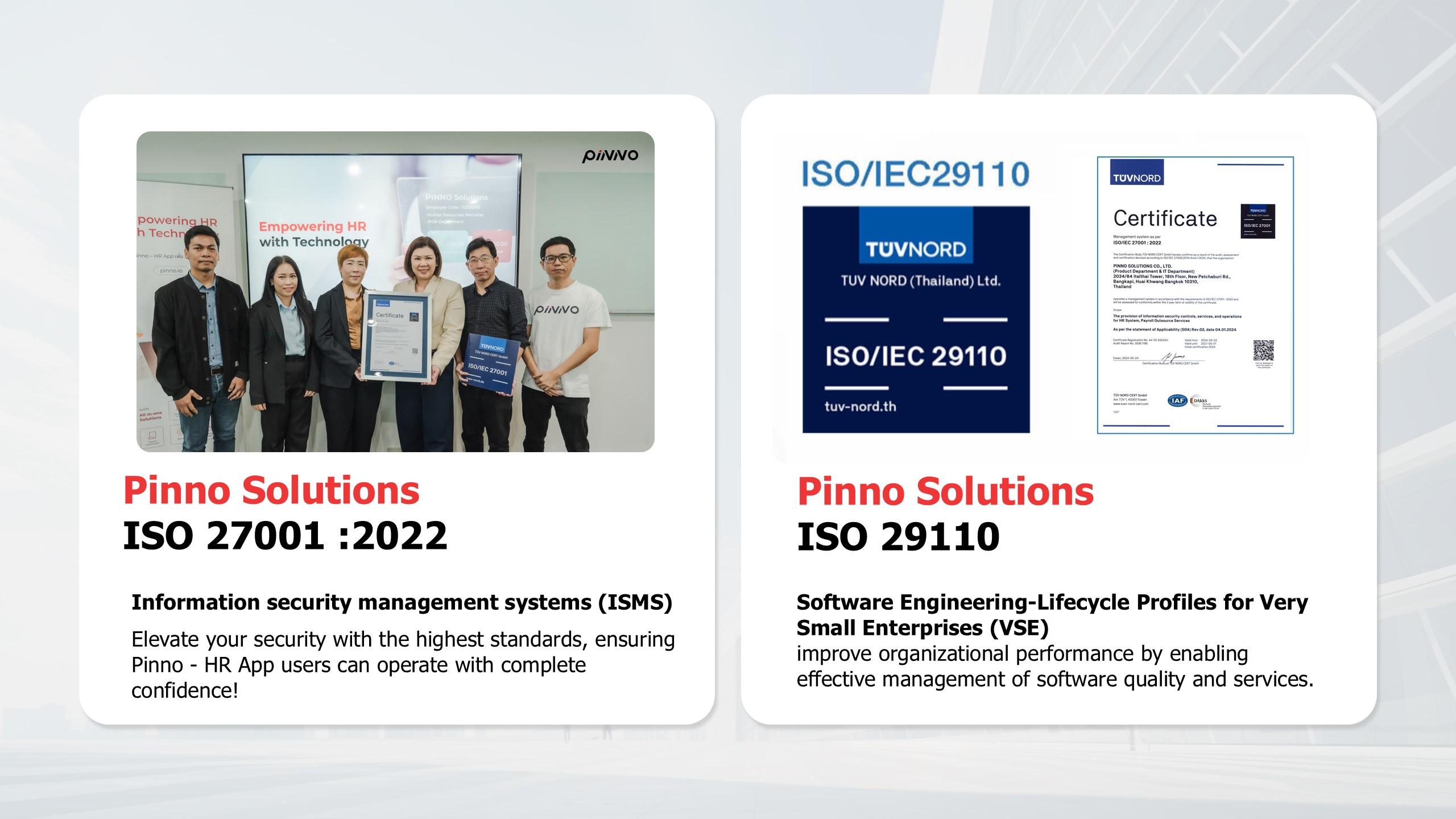
Business Innovation Development
The Company has developed the OS Invoice system, an innovation that enhances the invoice management process to be more accurate, faster, and more efficient. It is designed to automatically link data between various systems, reducing human error, increasing accuracy, and improving transparency in workflows. This system is part of the Company's Digital Transformation strategy, which aims to leverage innovation and digital technology to improve operational efficiency, align with international standards, and accommodate the increasing complexity of business operations.
Furthermore, in 2025, the Company organized the "PRTR STAR CREW AWARD 2025" project. to provide opportunities for personnel within the group of companies to showcase their potential, knowledge, and abilities through creative and innovative ideas that can be practically applied to improve work processes. The project operates under the core concept of "Think of Others," which focuses on considering others, whether colleagues, supervisors, or relevant stakeholders, to create shared value and enhance teamwork.
The selected works will be further developed and expanded to concretely improve the Company's operational processes. In 2025, a total of 9 employee teams participated in the project, reflecting the enthusiasm and involvement of personnel in driving innovation within the organization. Shortlisted works that will be further developed include:
The work from the Plug & Play team involves using RPA and automation technologies to improve the hiring requisition approval process, reducing the time taken in the hiring process from approval to issuing employment contracts for new employees. It also prevents errors in data preparation and safeguards against the leakage of employees' personal data.
The Ready To Pay team's achievement involves leveraging AI Chatbot and RPA technologies to improve the payment request approval process, providing employees with convenience in requesting disbursements from the accounting department. This reduces documentation steps and minimizes errors in the process. The AI Chatbot offers guidance and answers employee queries regarding the disbursement process, ensuring that requesters receive payments on time.
Customer Management Outcomes
In 2025, the Company received no complaints from service users regarding non-compliance with relevant regulations or laws, reflecting its commitment to conducting business responsibly, transparently, and with due regard for customer rights.
The Company conducted its annual customer satisfaction survey for 2025. to use the evaluation results as data for continuous development and improvement of service quality. The results of the customer satisfaction assessment has an average score of 4.09 out of a perfect score of 5.00, an increase from 2024, which had an average score of 4.05. reflecting a continuous trend in improving service quality and customer experience.
Community & Social — Plan & Guidelines
Has a Community & Social Plan
Yes
Plan Description
The Company has established a community and social management plan focusing on creating Shared Value through human resource development, education, health and quality of life, as well as protecting the rights of stakeholders. This is achieved by linking social activities with the organization's core expertise to ensure that community operations generate systematic and sustainable positive impacts.
Future Knowledge and Skills Promotion Plan
Objectives
To promote knowledge and prepare new graduates with essential work-ready skills.
Support human resource and labor development in society.
Connect the company's knowledge and expertise with the demands of the labor market.
Goals
Conduct knowledge transfer activities for the community/society ≥2 projects per year.
Promote and support information or activities related to human resource management and the labor market.
Approaches and Operational Measures
Collaborate with various universities to organize knowledge-promotion activities to prepare for the world of work.
Collaborate with foundations, associations, government agencies, and private organizations to develop and promote knowledge and employment opportunities for students, the general public, and underprivileged individuals.
Cybersecurity and Personal Data Protection Plan
Objectives
To enhance the security measures for the organization's information technology systems.
To prevent unauthorized leakage, access, or use of personal data.
To promote awareness and a culture of compliance with data protection laws.
Goals
Minimize or eliminate data leakage incidents within the organizational system.
Approaches and Operational Measures
Develop a response plan for data-related incidents such as system breaches, data leaks, and cyberattacks.
Develop a data security policy covering data collection, use, transfer, and deletion.
Organize training on the Personal Data Protection Act (PDPA).
Organize knowledge-sharing activities, such as Cybersecurity Awareness.
Plan Areas
| Plan Area | Other — Please Specify |
|---|---|
| Employment and professional skill development | |
| Education | |
| Occupational health, safety, health, and quality of life | |
| Disadvantaged and vulnerable groups | |
| Others | Cybersecurity and Personal Data Protection |
Community & Social — Targets
Has Set Community & Social Targets
Yes
Targets
| Indicator | Target Areas | Base Year | Base Year — Description | Target Year | Target Year — Description |
|---|---|---|---|---|---|
| Corporate Governance Assessment Results (CGR) | 3045 · Other name: Corporate Governance and Good Business Ethics · Description: Others | 2,024 | Excellent Corporate Governance (CGR) Assessment Results | 2,025 | Achieve an excellent CGR corporate governance rating for the third consecutive year. |
| Number of incidents or complaints regarding corruption or breaches of business ethics in business operations | 3045 · Other name: Incidents or complaints regarding corruption or breaches of business ethics. · Description: Others | 2,024 | 0 incidents or complaints of corruption or violations of business ethics. | 2,025 | 0 incidents or complaints of corruption or violations of business ethics. |
| Certified as a member of the Thai Private Sector Collective Action Against Corruption (CAC). | 3045 · Other name: Certification of Membership in the Thai Private Sector Collective Action Against Corruption (CAC) · Description: Others | 2,024 | Certified as a member of the Thai Private Sector Collective Action Against Corruption (CAC). | 2,025 | Certified as a member of the Thai Private Sector Collective Action Against Corruption (CAC). |
| Employment for persons with disabilities | 3042 · Description: Disadvantaged and vulnerable groups | 2,024 | Employment of persons with disabilities totaled 178. | 2,025 | Increased employment of persons with disabilities |
Community & Social — Performance & Outcomes
Has Performance Results
Yes
Performance Description
The Company focuses on investing and engaging with communities through knowledge sharing, skill development, and human resource capability enhancement, aligning with the organization's core expertise in human resource management, personnel development, and the labor market. This aims to create a positive social impact while supporting sustainable business growth. The Company categorizes its community and social activities into 3 main groups as follows:
1. Future Knowledge and Skill Promotion Plan
The Company conducts knowledge transfer and workforce skill development activities, utilizing its expertise in human resource management and personnel development as the core, to support the enhancement of workforce potential and the broader labor society, such as:
Launched a collaborative project with the Faculty of Business Administration, Bangkok University, through a Project-Based Learning initiative. This project offers Gen Z students the opportunity for hands-on learning through strategic analytical thinking, management, and problem-solving in real business scenarios. Students were tasked with developing and presenting business plans to compete for prize money totaling over 10,000 Baht, while also receiving experience sharing and preparation for future entry into the labor market from Mr. Niran Srichiangsa, Senior Vice President of External Recruitment Services, and Mr. Pongsathorn Jiwakarnon, Recruitment Manager. This reflects the Company's role in supporting youth potential development and education to sustainably enhance the readiness of a quality workforce for society.
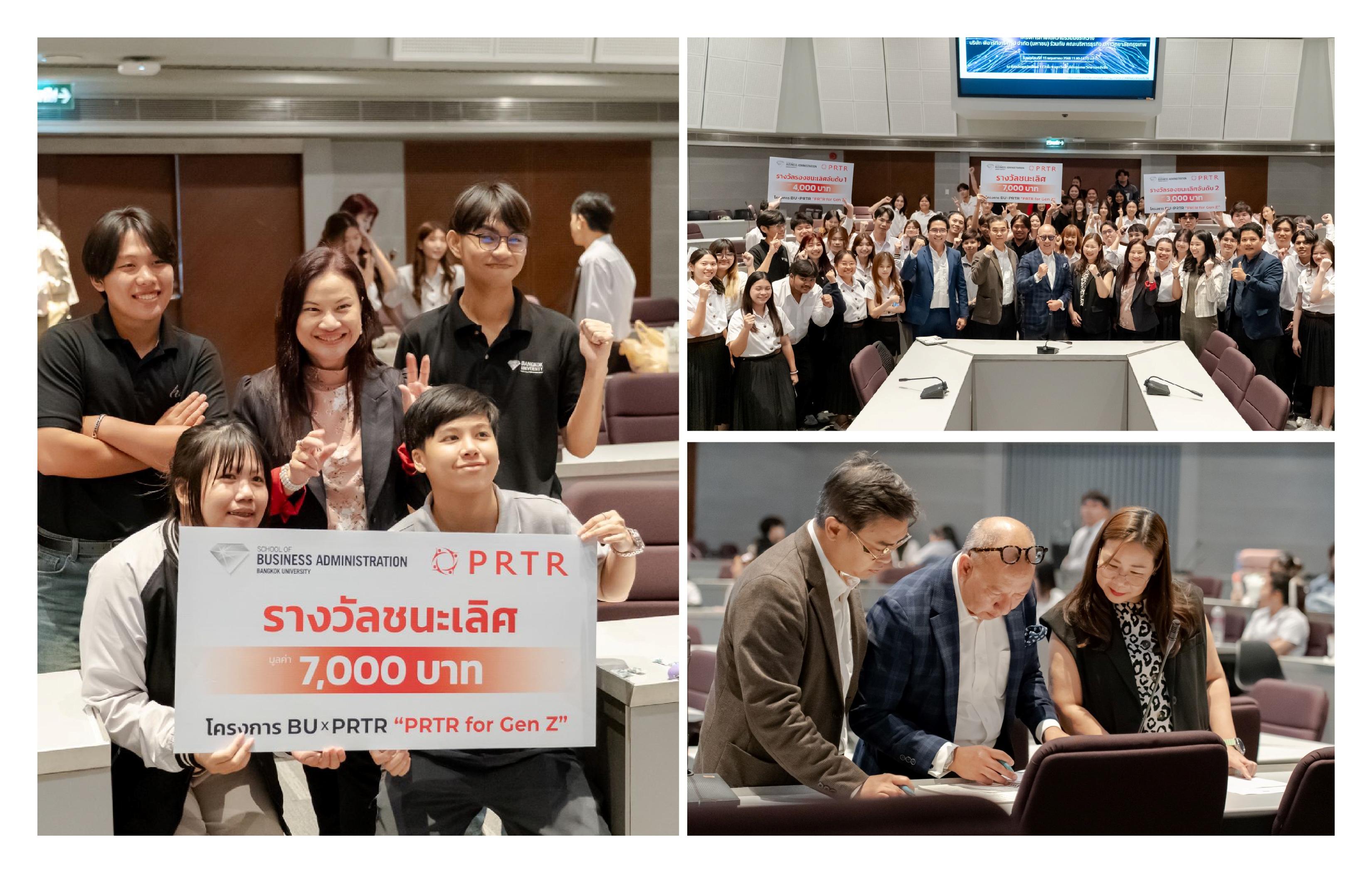
Co-organized a workshop with the organizers of the People Performance Conference 2025 on the topic "Beyond Resumes: How to Identify, Hire, and Keep the Right Talent" under the theme "Techniques for Selecting the Right Person for the Job" on April 1, 2025, led by Ms. Rissara Charoenpanich, Chief Executive Officer (as a speaker). This reflects the Company's role in sharing knowledge and experience in human resource management with participants from various organizations, contributing to elevating recruitment and retention practices in the labor market and supporting the sustainable development of personnel capabilities and the workforce.

Organized the 25th online HR Talk seminar on the topic "IDP for the Future Leaders: Cultivating Future Leaders for Organizations with the Right IDP" via Zoom, free of charge, on June 26, 2025. This aimed to promote knowledge and understanding of personnel and future leader development. The event featured the sharing of concepts and strategies for effectively creating Individual Development Plans (IDPs) and concretely linking them to the development of organizational leadership potential, with Ms. Jariya Boonpitakstit, Senior Vice President of Training Services from The Blacksmith, as the speaker. This activity is part of supporting continuous learning and human resource development, and helps strengthen the organization's readiness to develop leaders to accommodate future growth.
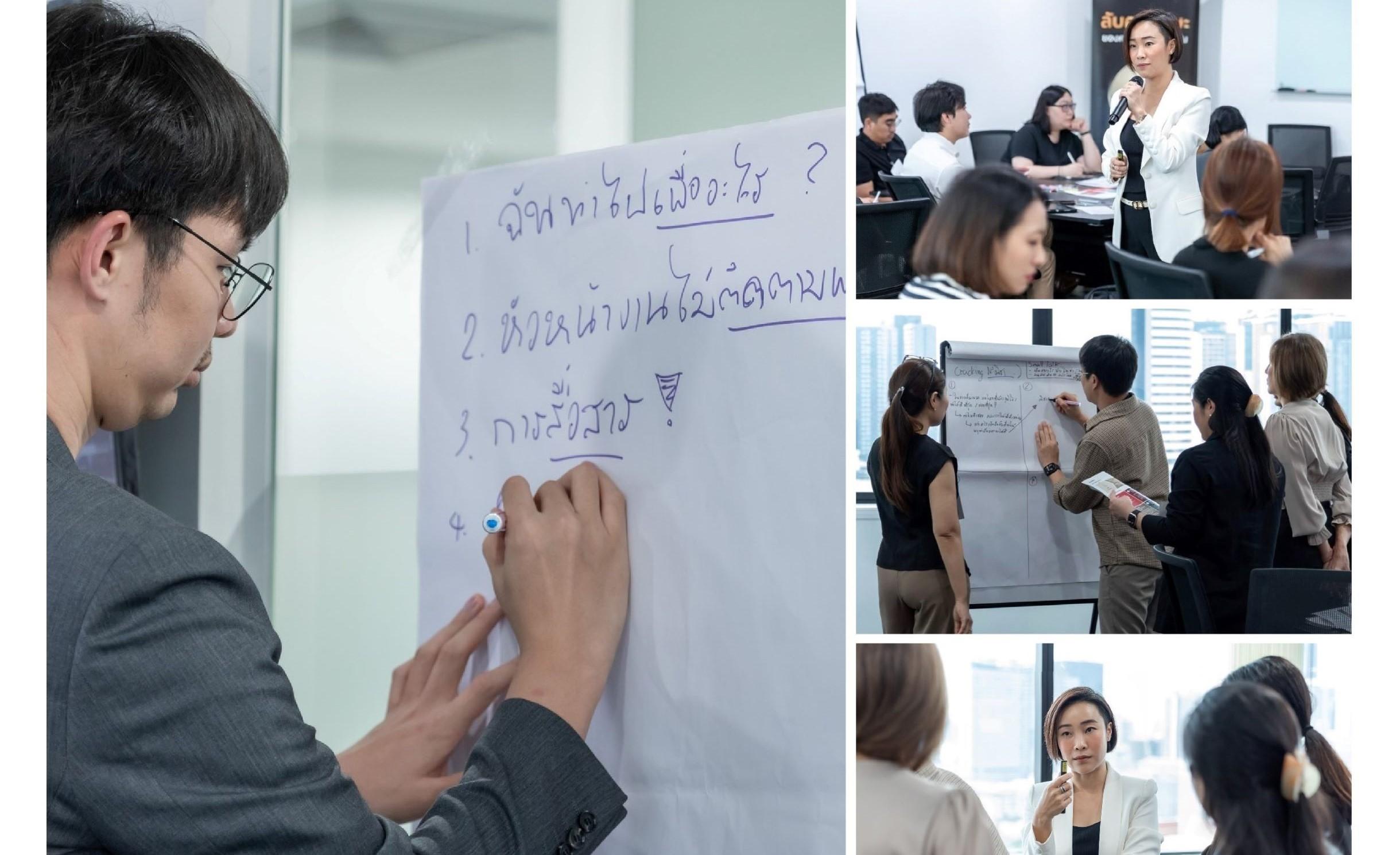
The Blacksmith, in collaboration with the Department of Skill Development, organized the “English for Work” training program for employees and the general public in July 2025 at the Company’s premises, which were provided as a learning and workforce development space. The program focused on enhancing practical English communication skills for workplace application, strengthening capabilities in alignment with the evolving demands of the Thai labor market, and supporting sustainable upskilling of the modern workforce.
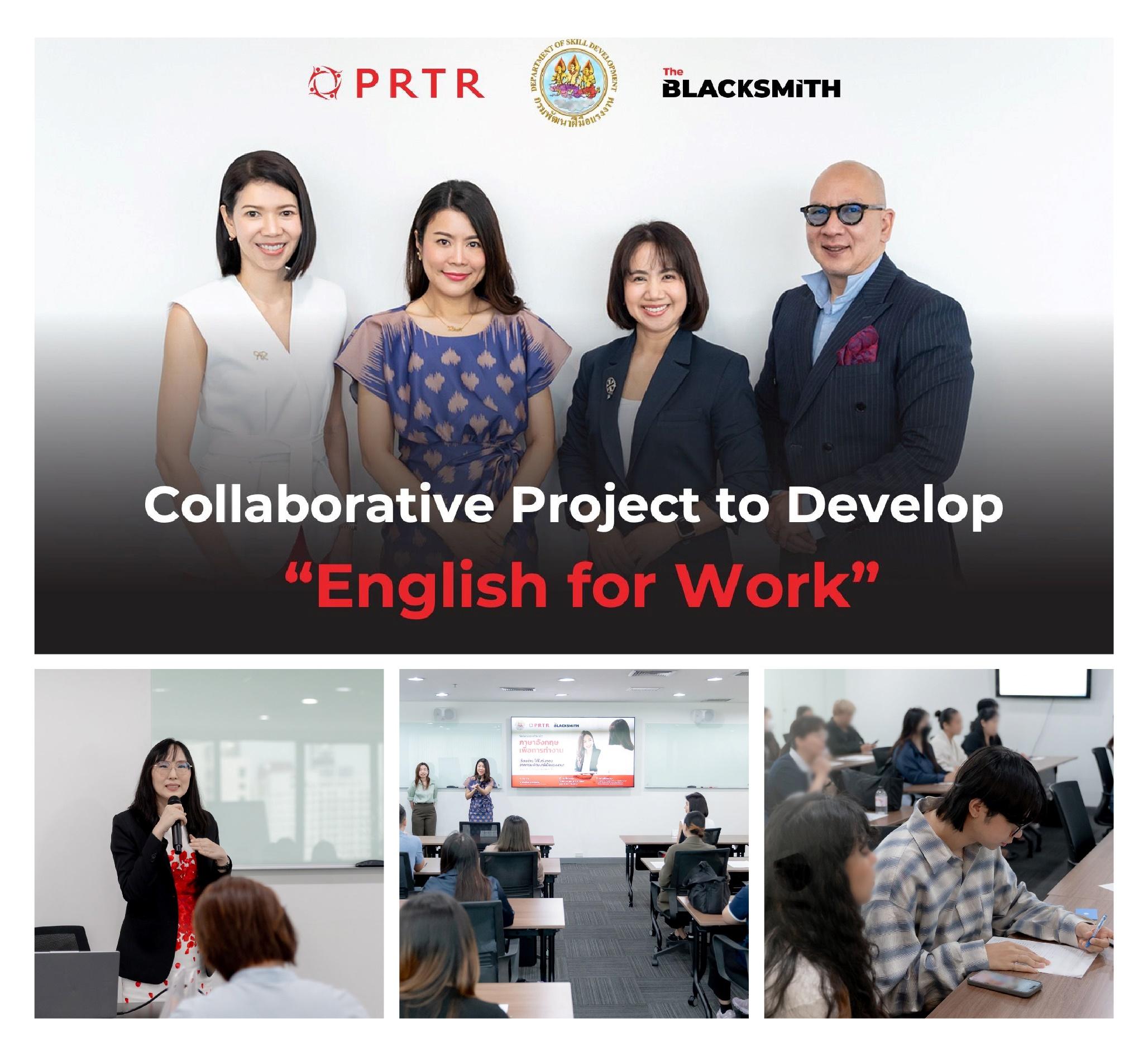
The Company, in collaboration with AustCham Thailand, organized a seminar titled “Transforming People in the Age of AI: The Real Driver of Change” on 3 September 2025 to exchange knowledge and perspectives on human resource development in the era of artificial intelligence (AI), and to support the sustainable readiness of both personnel and organizations for the evolving world of work.
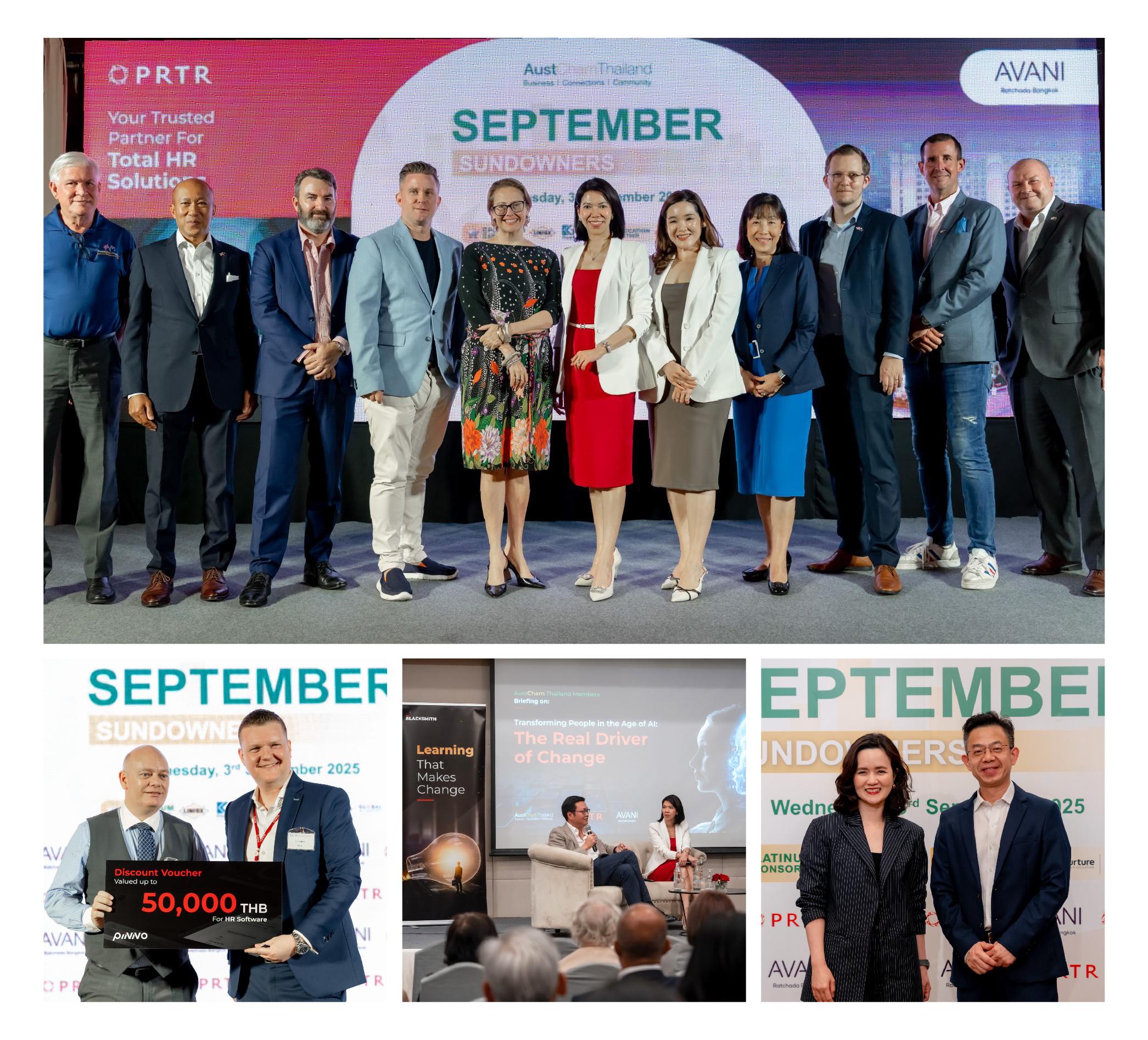
Participated as a speaker at the Digital HR Forum 2025, organized by the Ministry of Digital Economy and Society and the Digital Users Association of Thailand, with Ms. Jariya Boonpitakstit, Senior Vice President of Training Services from The Blacksmith, presenting on the topic "Shaping Tomorrow’s Leadership." This aimed to share perspectives on developing modern leadership and creating leaders ready for change, thereby supporting the sustainable enhancement of knowledge and capabilities of personnel in the workforce.
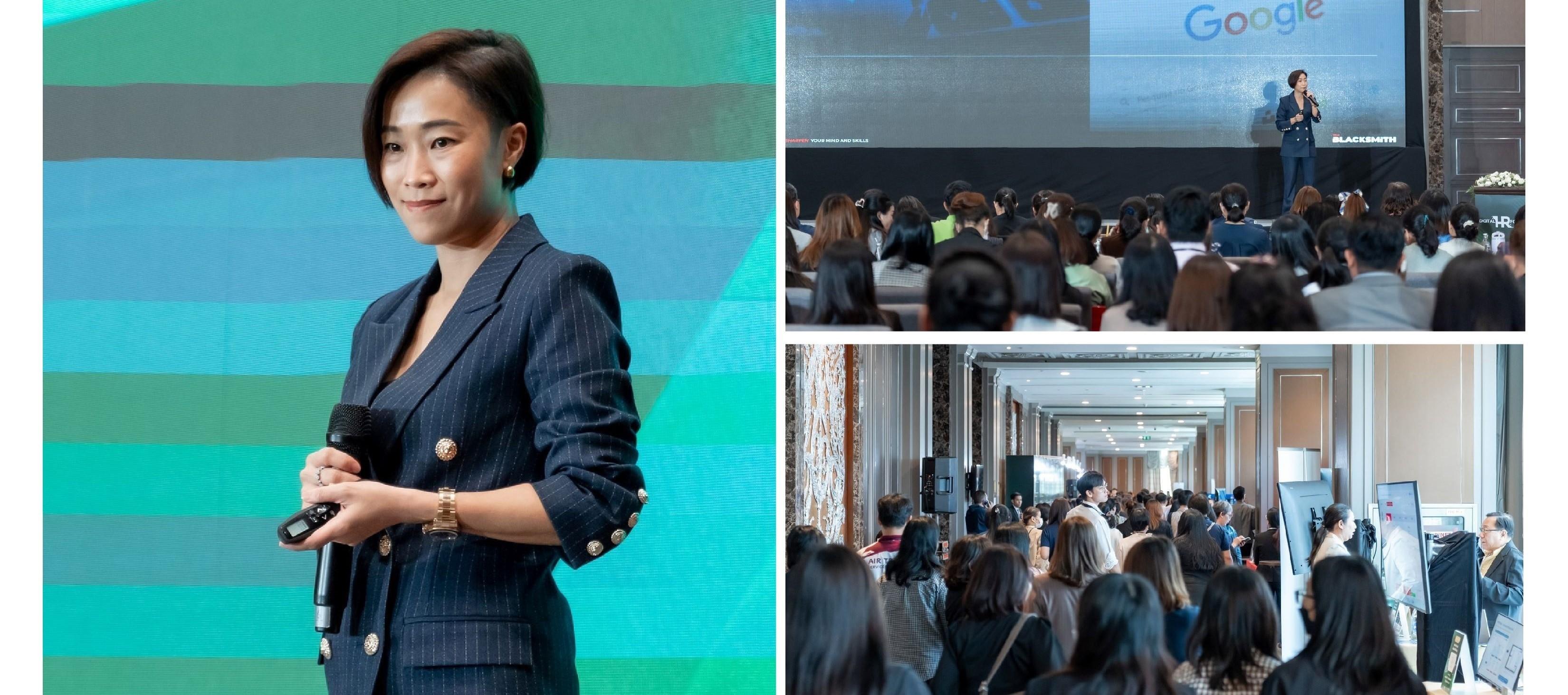
The Company develops and disseminates knowledge media on human resource development and leadership in e-Book format free of charge, including HRD Playbook 2026: The Augmented Leader, which presents essential skills for modern leaders and approaches to building Augmented Leaders within organizations, as well as The Game Changer Leader: Redefining Leadership for Relentless Change, and Salary Guide 2025. This initiative aims to support access to knowledge in human resource management, leadership development, and labor market information, thereby promoting learning and sustainably enhancing the capabilities of personnel in the workforce.
The KH Camp for Next C-Suite project continued for its second year as a student development camp offering insights from senior executives. The Company joined the program on May 28–31, 2025, sharing knowledge on career preparation, leadership, and mindset. This reflects the Company’s commitment to nurturing future leaders and sustainably developing youth potential and workforce quality.
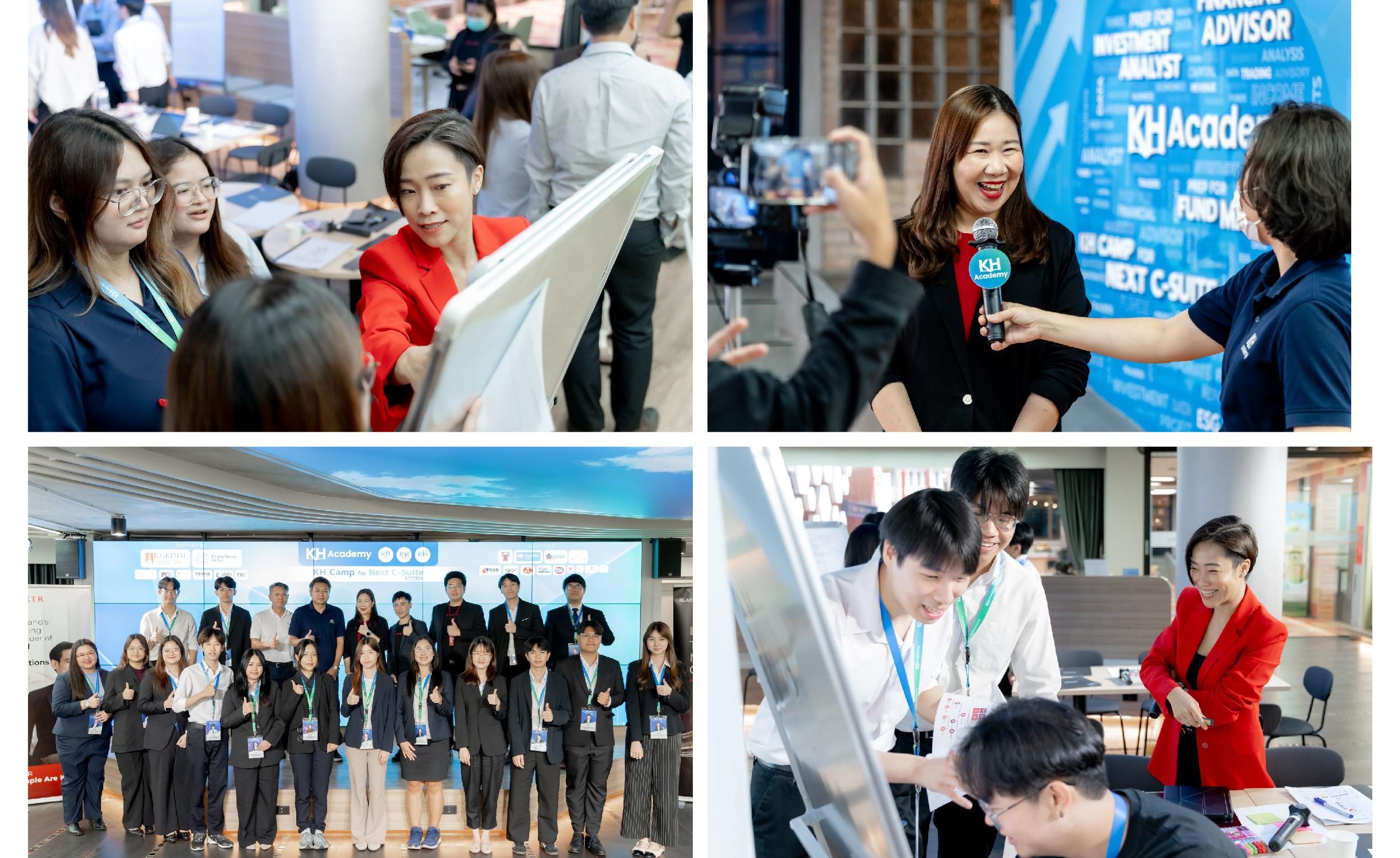
2. Employee and Skilled Volunteer Engagement
The Company encourages employees to participate in community and social development by utilizing their skills and expertise in human resource management, such as serving as speakers, sharing knowledge, developing learning content, and collaborating with network partners. This provides opportunities for employees to contribute to social value creation while continuously developing their own potential.
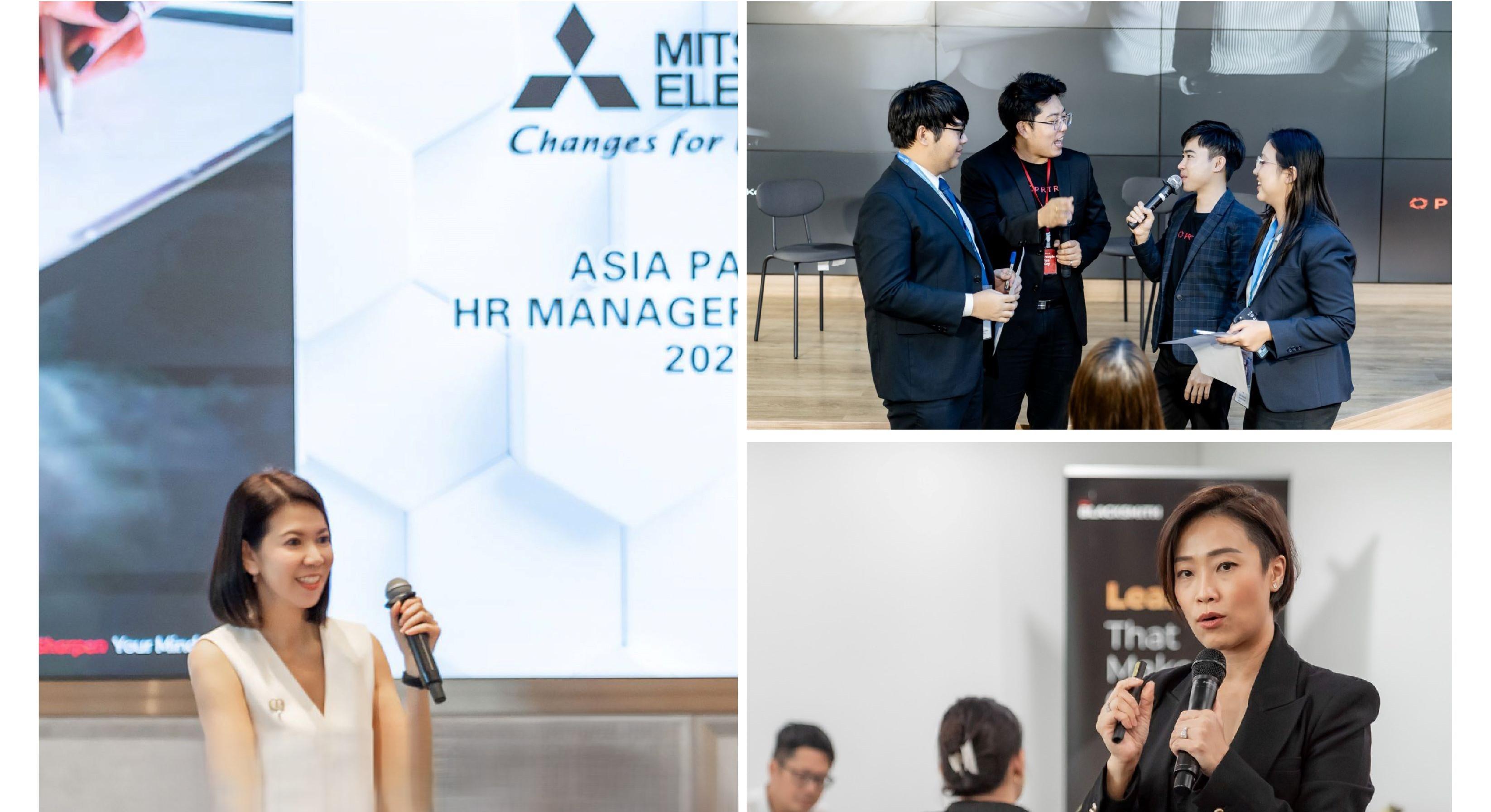
3. Promotion of Culture, Society, and Philanthropic Aid
The Songkran water-pouring ceremony was held from April 10–30, 2025, to promote and preserve Thai cultural values and traditions. The Company invited Buddha statues from nearby community temples for employees to participate in the activity, reflecting the organization's connection with the surrounding community and society. This activity helped raise awareness of cultural values, foster good relationships, and support harmonious coexistence in society.
The Company, in collaboration with the Volunteer Bank and the Thai Health Promotion Foundation (ThaiHealth), organized a Deep Listening workshop for employees of The Mall Group, led by Ms. Pimporn Phonprat, Vice President of Central Administration, Human Resources Department, on December 3, 2025. This initiative aims to promote quality communication skills, understanding of others, and the creation of positive workplace relationships, as part of supporting sustainable human resource development and social well-being.
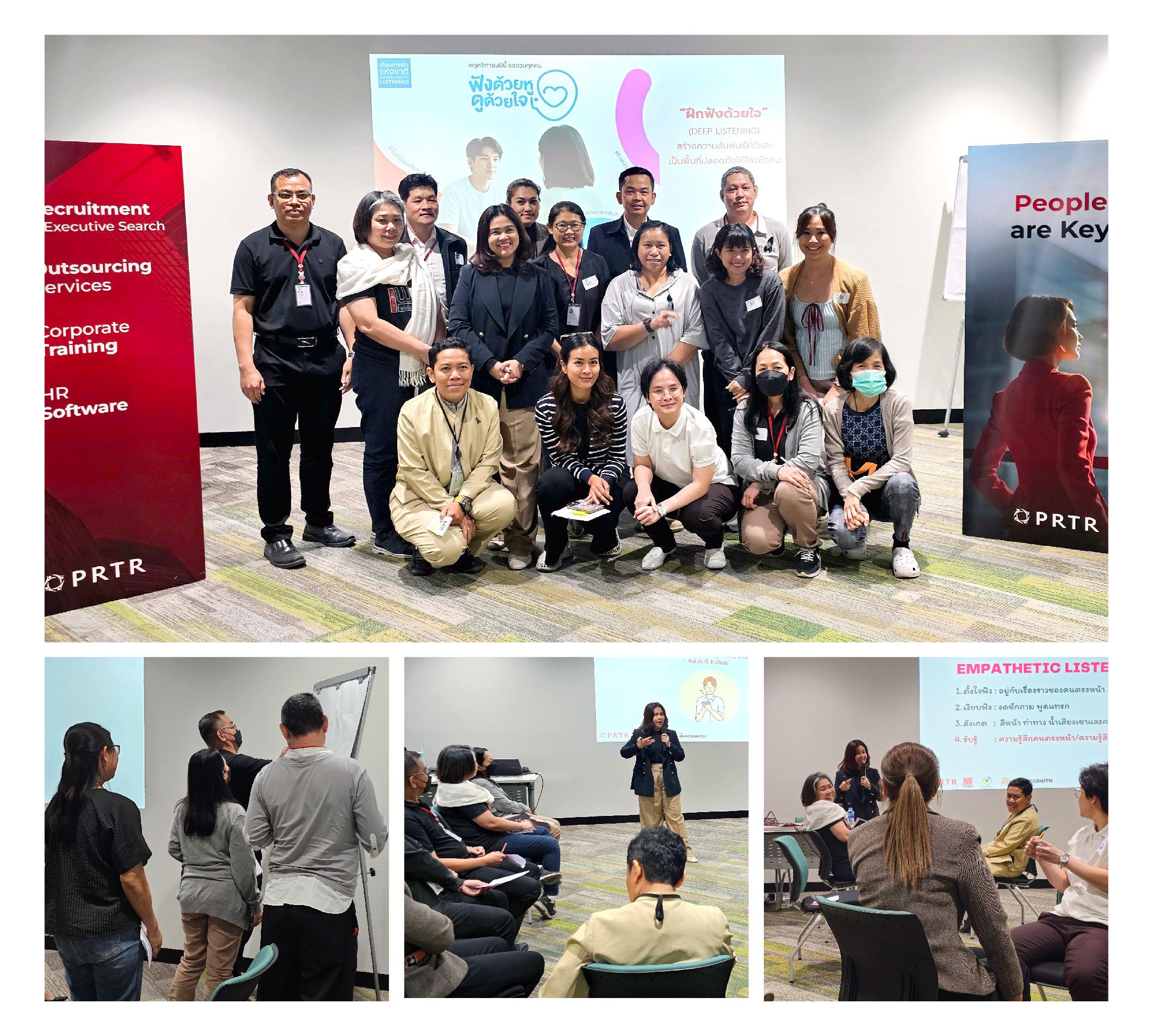
The Company donated 9,467 Baht to support charitable activities through the Thai Red Cross Society, aiming to assist society and underprivileged individuals.
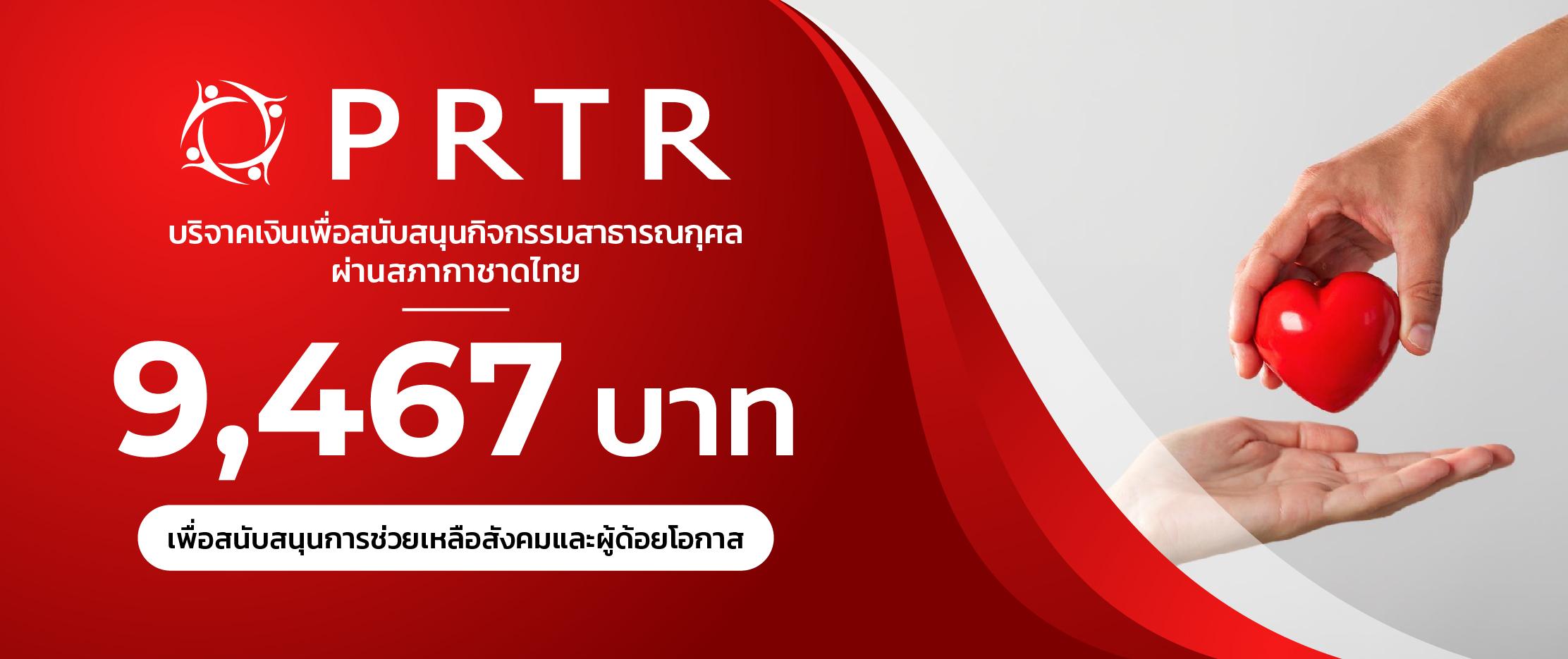
Summary of Operations
In 2025, the Company implemented 11 community assistance and social development projects. And has developed and disseminated knowledge in digital media format free of charge, to expand access to knowledge for the wider society. All these activities reflect the Company's role in investing in communities through knowledge and skills, coupled with fostering employee engagement and sustainable workforce development.
Other Social Management
Plan & Outcomes — Description
Corporate Governance and Good Business Ethics The Company has established a good corporate governance policy, adhering to the principles of good corporate governance for listed companies. It defines the structure of good corporate governance, the roles, duties, and responsibilities of the Board of Directors, as well as principles for transparent, clear, and auditable management. This serves as a guideline for management to ensure that all operations of the Company are conducted fairly, build credibility, and create value for the sustainable growth of the business. The Company participated in the Corporate Governance Report of Thai Listed Companies 2025 (CGR) survey project for the third consecutive year, organized by the Thai Institute of Directors Association (IOD).
Goal : Maintain an "Excellent" CGR corporate governance assessment result.
Operational Performance: The Company received a 5-star rating or "Excellent" (Excellent CG Scoring) in the Corporate Governance Report of Thai Listed Companies 2024 (CGR) since its first year of listing.
Anti-Corruption and Bribery The Company has established an anti-corruption policy, recognizing the importance of conducting business with transparency, business ethics, and responsibility towards society and the Company's stakeholders, which are fundamental principles of good corporate governance. The guidelines and operational plan for anti-corruption are as follows:
Establish an anti-corruption policy for the operations of the Company and its subsidiaries.
Not to be involved in corruption, to adhere to virtues and ethics in accordance with good corporate governance principles, to manage the business with transparency, and to be responsible to all stakeholders.
Oppose all forms of corruption and bribery, whether by soliciting, accepting, paying bribes, or providing assets, including any other benefits, to government officials or any other individuals doing business with the Company. Guidelines for appropriate conduct have been established for the Board of Directors, management, and employees.
Encourage the Company's partners to conduct business legally and transparently, with the goal of fostering cooperation to promote sustainable societal progress.
Conduct a corruption and bribery risk assessment.
Train, communicate, and supervise employees to comply with the anti-corruption policy, and provide communication channels for receiving complaints or suspicious tips regarding dishonest or corrupt acts to the Chairman of the Audit Committee, in accordance with the Whistleblowing Policy, which includes the following channels:
Company Website: https://www.prtr.com/
Email: whistleblowing@prtr.com
Postal Address: PRTR Group Public Company Limited 2034/82 Italthai Tower, 18th Floor, New Petchburi Road, Bangkapi, Huay Kwang, Bangkok 10320
Goal
0 incidents or complaints regarding corruption or violations of business ethics.
Certified as a member of the Thai Private Sector Collective Action Against Corruption (CAC)
Operational Performance
2022: 0 complaints arising from violations of business ethics.
2023: 0 complaints arising from violations of business ethics.
2024: 0 complaints arising from violations of business ethics.
Year 2025: 0 complaints arising from violations of business ethics.
The Company has been certified as a member of the Thai Private Sector Collective Action Against Corruption (Thai CAC) by the Thai Institute of Directors Association, demonstrating its intention and commitment to combating all forms of corruption through transparent management in accordance with good corporate governance principles, thereby building confidence among all stakeholders.
The Company has announced a No Gift Policy to align with its policy on giving or receiving gifts and entertainment. The Company has requested cooperation from partners to refrain from giving or receiving any type of gifts during the New Year festivities or any other occasions. The Company communicates and publicizes this both internally and externally.
Organize training and communication for employees to be aware of the Company's policies, guidelines, and channels for reporting tips and complaints.
Cybersecurity and Personal Data Protection
To ensure that the Company's information technology systems, network systems, and computers maintain the highest level of security. For sustainable business operations, system and data security are crucial for user confidence. As the Company's business involves collecting, storing, and processing a large amount of personal data of employees and applicants, the Company places great importance on protecting and maintaining this data, especially in an era where technology access and cyberattacks are becoming increasingly complex.
The Company has established information technology system security control processes in accordance with ISO/IEC 27001, the international standard for Information Security Management Systems (ISMS). Furthermore, the Company complies with the "Personal Data Protection Act B.E. 2562 (2019) (PDPA)" by developing a Personal Data Protection Policy to serve as a guideline for directors, executives, employees, and relevant parties to ensure compliance and legality in their work.
Goal
0 incidents of internal data leakage.
0 cases of personal data breach complaints
0 cyber security incidents impacting operations
Operational Performance
Develop and practice a disaster recovery plan for critical systems: The Company regularly develops and practices a readiness plan for recovering critical organizational systems annually. The Company's IT department conducts tests to recover critical organizational systems to ensure business continuity in the event of an emergency. This includes simulating computer threats and testing system recovery, with test results showing successful system recovery to normal operation as planned.
Provide communication channels and educate employees on cybersecurity: The Information Technology Department provides communication and education on cybersecurity through various channels such as the Company's Line Application, Intranet system, and Email, to disseminate knowledge and publicize news to raise awareness and build a foundation for cybersecurity protection and the use of the Company's information systems. This also includes organizing data security training for new employees.
Supply Chain Management
The Company has established policies and a code of conduct for procurement, sourcing, and hiring partners to serve as guidelines for developing the Company's sustainable business, in accordance with business ethics, quality and standards of goods and services, respect for human rights, fair labor practices, occupational health and safety and working environment, responsibility towards communities and society, and environmental responsibility.
The Company's operational processes are as follows:
1. Partner recruitment and selection, with criteria for critical Tier 1 suppliers.
1.1. Partners with high contract values of 5 million Baht or more.
1.2. Partners critical to the Company's business operations.
1.3. Partners with limited availability or for whom alternative goods or services cannot be found.
2. Identification and assessment of partner risks, which includes evaluating economic, social, and environmental risks after registration as a partner. This requires passing an annual performance evaluation (Yearly Suppliers Evaluation) using a partner evaluation form (selection and evaluation form), with scoring criteria divided into 4 grades as follows:
Grade A: Score 90 – 100
Grade B: Score 75 – 89
Grade C: Score 60 – 74
Grade D: Score less than 60
3. Promoting and supporting the sustainable development of partners through various projects, including occupational health, to help develop partners' business operations.
The Company has a policy to set payment terms (Credit Term) for partners ranging from 0 to 90 days. The payment period will depend on the mutual agreement between the partner and the Company, considering the nature of the partner's operations, the duration of the business relationship between the Company and the partner, or other appropriate factors, with a focus on maximizing efficiency. These payment terms will be agreed upon with each partner from the initial stage of becoming a Company partner to ensure fairness and transparency.
For the year ended December 31, 2025, the Company's average payment period was 12 days. This reflects efficient cash flow and financial liquidity management, which helps build confidence among partners and stakeholders.
Law Violation Incidents
Law Violation Incidents
| Metric | Current Year | Previous Year | Two Years Ago |
|---|---|---|---|
| The total number of cases or incidents of significant violations of laws or regulations regarding social and human rights (Cases) | 0 | 0 | 0 |
| The total number of cases or incidents that cause significant labor disputes (Cases) | 0 | 0 | 0 |
| The total number of cases or complaints related to consumer rights violations (Cases) | 0 | 0 | 0 |
| The total number of cases or complaints related to partner rights violations (Cases) | 0 | 0 | 0 |
| The total number of cases or incidents that cause disputes with the community/society (Cases) | 0 | 0 | 0 |
| The total number of cases or incidents related to cyber security or customer data breaches (Cases) | 0 | 0 | 0 |
| The total number of cases or incidents related to safety and occupational health at work (Cases) | 0 | 0 | 0 |